How to Heal Anxiety With Holistic Psychotherapy

Originally Published May 2024 | Last Updated September 2026
If you’re barely staying afloat in the chaos of anxiety, wondering if you’ll ever find an exhale, welcome in.
I have a feeling you’ve finally realized that healing is more than just learning some coping skills and applying them to your life. You’ve probably had glimmers of feeling better, but it never quite sticks. And you’re ready for something that goes deeper. Something that reaches the pain, the patterns and the programs your mind, heart and body have been holding for far too long. That deeper work has a name, and it’s called holistic therapy for anxiety.
From the outside, you probably look fine. You're functioning. But underneath it all is a constant hum of overthinking, self-criticism, replaying the events of the day, and the background noise of everything you haven’t gotten to yet. It’s like life suddenly got too loud, and the volume knob stopped working.
That noise isn’t just annoying. It’s information.
At the heart of it all, anxiety is an SOS. It’s your body waving its hand in the air, asking for your loving care and attention. I’m inviting you to grab a cup of tea and settle in. This article is going to help you slow down, listen in, and learn how to actually tend to your anxiety, not just get rid of it.
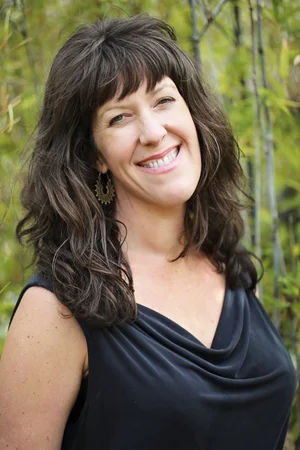
I’m Kim Burris, a licensed marriage and family therapist, founder of The Holistic Counseling Center, and my work has been featured in Vogue, Bustle and the Daily OM. I’ve spent over a decade helping people heal anxiety at the root instead of just quieting the symptoms, and I’m so glad you’re here.
If you’re ready to understand what’s actually driving your anxiety, why you can’t just think your way out of it, what genuinely helps you heal, and what holistic therapy can do when self-care practices alone aren’t enough, let’s dive in!
-
• What Is Holistic Therapy for Anxiety?
• What Are the Signs and Symptoms of Anxiety?
• What Is the Root Cause of Anxiety?
• Why You Can’t Always Think Your Way Out of Anxiety
• How to Heal Anxiety Naturally
• How Does Therapy Actually Heal Anxiety?
• Can Spirituality Help Heal Anxiety?
• What Is the Best Therapy for Healing Anxiety?
• How Long Does It Take to Heal Anxiety?
What Is Holistic Therapy for Anxiety?
Holistic therapy for anxiety is talk therapy expanded to treat the whole person: mind, heart, body and spirit. Instead of just managing symptoms in isolation, it looks for the root of your anxiety across every part of your life: your nervous system, your personal history, your relationships, and your sense of meaning and purpose. It honors and treats all parts of you, and focuses on healing and integration rather than pathologizing the anxiety symptoms.
Many approaches to treating anxiety zoom all the way in and focus on one piece of the puzzle. Cognitive behavioral therapy looks closely at your thinking, and how thought patterns feed anxiety. Somatic therapy goes deep into the body, looking for how and where anxiety is stored. Medication works on your brain chemistry. Mindfulness trains your attention. Every one of these is genuinely useful, and our therapists here at The Holistic Counseling Center draw on all of them. But any single one of them, on its own, can only take you so far on the healing journey.
A holistic approach to treating anxiety zooms out to consider how the entire system works together. We're looking at how what's happening in your head and your heart is showing up in your body. How intergenerational trauma and cultural conditioning are showing up in your nervous system and thought loops. How spiritual beliefs might be causing unintended shame and self-criticism. We're looking for patterns across every domain of your life: mental, emotional, cultural, physical, and spiritual.
Holistic therapy for anxiety takes your symptoms out of the silo and puts them into a larger frame, so you can finally see the unique constellation of your symptoms and not some generic list.
Healing looks like learning how your head, heart and nervous system came to work this way in the first place. Then finding the tools that actually calm and soothe your symptoms, while you also rewire and repattern the root underneath them.
Holistic anxiety treatment can include:
• Holistic psychotherapy
• Somatic tools for nervous system regulation
• Breathwork
• Meditation and mindfulness
• Yoga and movement practices
• Acupuncture
• Medication
• Functional medicine and nutritional psychiatry
• Dietary changes and sleep
• Spiritual practices
Here's the tricky thing about anxiety. It rarely announces itself as anxiety. It shows up as exhaustion, or irritability, or a body that can’t breathe deeply, or a mind that won't stop thinking. So before we talk about healing it, let's look at how it actually shows up in life.
What Are the Signs and Symptoms of Anxiety?
Anxiety doesn't look the same in everyone, which is part of why it's sometimes so easy to miss or dismiss when it shows up in your life. It's also so common that it can start to feel 'normal.' Racing thoughts. Exhaustion. A keyed-up nervous system. Second guessing yourself at every turn. Legit panic attacks. Common? Yes. 'Normal?' No.
The Diagnostic and Statistical Manual of Mental Disorders, the DSM-5, defines generalized anxiety disorder as persistent worry that's difficult to control, along with restlessness, trouble concentrating, irritability, muscle tension and disrupted sleep, present for more than six months and interfering with your daily life. That's the clinical definition for a diagnosis. But you do not have to meet the full DSM criteria to seek support. Many of the people I work with never have.
Anxiety can affect your physical, emotional, spiritual and mental health in many ways, and some of them are surprising. Here's how it tends to show up:
In your body
• Chest tightness, a racing or pounding heart, shallow breathing
• A hard time sitting still, chronic restlessness
• Headaches, nausea, chronic stomach upset
• Exhaustion, even on the days you didn't do much
• Sleep is hard, you can’t fall or stay asleep
• Reaching for food or a drink to take the edge off
• Panic attacks, anxiety attacks
In your mind
• Worry that just won't quit
• Brain fog
• Rehearsing conversations that haven't happened yet
• Intrusive thoughts, rumination
• Being 'irritable for no reason'
• Perfectionism, and self-doubt that keeps you from doing what you actually want
In your heart
• Easily overwhelmed by your emotions
• Hard on yourself in a way you would never be with someone you love
• Afraid of being seen, being judged, being found out
• Distance creeping into your closest relationships
• Self-sabotage patterns
In your spirit
• A quiet disconnection from your intuition and Source
• Questions about meaning and life purpose
• A life that looks great on paper but you still feel like an imposter
There's a lot more to explore about the spiritual nature of anxiety than I can get into here. You can learn more in my article: 6 Spiritual Symptoms of Anxiety.
You might also recognize yourself in these thoughts:
• I'm not experiencing a crisis, but always feel on edge, stressed out and overwhelmed.
• Some days are easier than others, but it could be worse so I'll try not to complain and just keep going.
• I'm quite hard on myself, but isn't that normal?
• My life is okay, not great; there must be more, but I can't figure it out.
• Stress and overwhelm are a normal part of being human, it's not that bad.
If you see yourself in any of the above, it probably feels like anxiety is starting to run your life. It might be time to slow down and listen. Because anxiety isn’t just in your mind, and you're not being dramatic.
Before we get into how to actually heal anxiety, let’s look at the question underneath all of it. Where did your anxiety come from?
Looking for a holistic therapist for anxiety?
We’d love to help. Book a free consultation call to get matched with an anxiety therapist. Book a Free Consultation Call
What Is the Root Cause of Anxiety?
There is no single root cause of anxiety. I know, I wish there was!
For most people it's a combination of: a nervous system that got programmed early on to stay hypervigilant, experiences that were never fully processed, and daily inputs like sleep, caffeine and alcohol that keep the whole system out of whack. Finding your particular combination is where healing actually starts.
Sometimes it comes from a string of relationships that asked you to dampen your spirit or hide your heart. Sometimes it's unresolved childhood trauma that nobody ever named as trauma. Or a history of medical procedures, and a body that learned early on that the world isn't safe.
And sometimes it comes from loving caregivers who simply had a different temperament than yours, and left you with a relationship template that never quite landed. And you learned early in life that you were too much, or not enough, and that you had to show up in a particular way to stay connected.
Nothing traumatic has to have happened for anxiety to have taken root in you.
When you start holistic therapy for anxiety, we are working with you to unearth the map. To find the unique combination of temperament, environmental impact and life history that brought you to this moment and these symptoms.
Is it your sleep? Your caffeine? The glass of wine most nights that helps take the edge off temporarily? Is it your relationship with your father? Your parents' divorce? The fact that you moved ten times before you turned twelve? Is it all of it, weighing heavy after all these years?
Every one of us has been programmed to some degree, by our culture, our upbringing, the household we grew up in. Some of that programming served you. Some of it helped you survive. All of it is still running in the background, impacting your day to day in seen and unseen ways.
Part of the work in therapy is sorting out which is which. What's authentically yours, and what did you inherit? What are you consciously carrying forward in your life, and what is still unconsciously dragging you down?
What shows up through this inquiry is your own unique constellation. Nobody else is wired the way you are, and there’s no magic five-step plan that will help you ‘fix it.’
After uncovering the map, the healing journey deepens. And it’s not just about thinking your way out of anxiety. It’s so much more than that.
Why You Can’t Always Think Your Way Out of Anxiety
When your body is activated, and anxiety takes over, you can’t think your way out of it. That’s because the brain is flooded with stress hormones, and the body is responding to the chemical cocktail that is anxiety, and no single thought can just turn it off.
Your body has to metabolize the emotions, the hormones, the neurochemical response before the brain can come back online. This is why telling someone to ‘calm down’ when they are having a panic attack doesn’t work. It’s just not possible in the moment.
You've probably felt this. You know the email from your co-worker wasn't a personal attack. You know the difficult conversation went okay. You know your kid is safe at the sleepover. And none of it lands, because the thoughts are happening in one place and the fear is happening in another. Knowing lives in the mind. Fear, panic and overwhelm live in the nervous system.
Here's what the research says is happening. Under acute stress, a surge of noradrenaline and dopamine weakens the connections in your prefrontal cortex, the part of you that reasons and plans and holds perspective, while strengthening the circuitry that scans for threat (Arnsten, 2009). Your thinking doesn't disappear. It just loses traction, right when you need it most.
So when the mind shows up and says ‘oh no, this is anxiety, what do I do with it,’ and then tries to think its way out, it's reaching for the one tool that's least available at that moment.
Your Brain Is Built to Keep You Alive
There's a second reason this is hard, and it's the one that often keeps people stuck for years.
Your brain is built to keep you alive, not to make you happy. It will continue doing what it knows how to do, what it remembers to do, what its habitual default is to do. Even when it’s a ‘bad habit’ or something you know isn’t serving you.
And learning something new doesn't eradicate the old pattern. When your brain learns that something is safe, it doesn't erase what it learned before. It files the new version alongside the old one, and under stress the old one is still the default button, but it’s a well-worn groove (Bouton, 2004). Your nervous system runs the old script because it's the one it knows best, not because you are consciously choosing it.
Which is why healing anxiety takes lots of practice, and repetition.
Change Your Body to Change Your Mind
So what do you do?
You can try to change your mind by thinking a new thought, or you can change your mind by changing your body.
The body is often the fastest way to make a change, and that’s because of your wiring. Your vagus nerve carries far more signals from the body up to the brain than it sends from the brain back down (Berthoud & Neuhuber, 2000). Most of the traffic runs upward, which means the body has a more direct line to your state than your thoughts do.
But the bigger reason is that the body is simply the easiest place to start. You can't just decide to stop a thought. But you can almost always change your breath. You can stand up, walk outside, get your feet on the ground, let your shoulders drop away from your ears. When everything else feels impossible, these practices are still possible.
So when you slow your breath, when you move, when you get outside, you're not distracting yourself. You're sending an intentional message up to the brain: we're moving, we're outside, we're safe.
The Work That Happens When You're Not Anxious
And here's the part of the work I love sharing with people: Sometimes the most important work doesn't happen while you're anxious. It happens when you're not!
Part of healing anxiety means learning how to feel good in your body. It looks like learning to recognize, honor and lean into a moment of calm. To notice a regulated nervous system. To feel pleasure, joy and connection. So that when anxiety does show up, your body recognizes it sooner, metabolizes it faster, and has more confidence about what to do with it. You're not trying to totally get rid of anxiety. You're building capacity to metabolize anxiety before it arrives.
This is the part of healing that often surprises people. It isn't only about diving into the hard stuff. It's also about learning to notice the good and stay with it, so your system has something else to reach for.
Yes, you need the practices on the hard days, when anxiety is loud and you're just trying to get through it. And you need them on the ordinary days, when nothing is wrong, because the ordinary days are where the capacity actually gets built.
So let's talk about what those practices actually are.
How to Heal Anxiety Naturally
What anxiety is really calling out for is radical self-care, self-soothing and self-acceptance. The practices below are how you start answering that call. None of them will make anxiety disappear overnight. But all of them will help build your body's capacity to move through anxiety more skillfully, with greater ease and confidence over time.
I recommend starting with one practice that feels the most doable, and making it something you do consistently before adding more than one to your plate.
Breathwork
Breath is powerful medicine. Conscious breathing can change your heart rate, your nervous system and your emotions in 5-10 minutes!
Slowing down the breath is a great place to start. A 2023 meta-analysis of randomized trials found breathwork reduced stress and anxiety compared with control conditions (Fincham et al., 2023).
You don't need a fancy technique or lots of time. Set a timer on your phone for 8 minutes and practice making your exhale longer than your inhale. That's the whole practice.
And if you’d like to be guided through it rather than figure it out on your own, there is a breathwork practice waiting for you on our guided meditations page.
Movement
Movement metabolizes what's stuck. A meta-analysis of exercise for anxiety and stress-related disorders found meaningful symptom reductions, with higher-intensity exercise outperforming lower (Stubbs et al., 2017), though the trial pool is still small and the research is catching up to what bodies already know.
It doesn't have to be a full workout at the gym. A walk counts. Getting outside for some stretching counts. Dancing in your kitchen while cooking dinner absolutely counts.
One of my favorite ways to practice right now is Somatic Dance Sundays with Sah D’Simone. Check it out here.
Meditation and Mindfulness
This is the practice with the strongest evidence behind it. In a 2023 randomized trial, an eight-week mindfulness-based stress reduction program worked as well as escitalopram, a first-line anxiety medication, for adults with anxiety disorders (Hoge et al., 2023).
At the heart of a mindfulness practice is slowing down and paying attention to the moment. See if you can really notice and feel what you are doing. How you walk from room to room. How it feels to put lotion on your hands. What your food really tastes like.
If you want guidance to start, I made this 5-Minute Grounding Meditation for Anxiety Relief practice.
Self-Compassion
This is the practice most likely to feel impossible, but oh so important for healing the heart of anxiety. A meta-analysis of fourteen studies found that higher self-compassion is strongly associated with lower anxiety and depression (MacBeth & Gumley, 2012). And it can be learned.
Here's one way to practice self-compassion: notice how you talk to yourself when you're anxious. Notice the criticism, judgment or harsh tone of voice. Then try again, talking to yourself the way you would talk to someone you love, or the way you'd soothe an upset child.
Sleep and Nutrition
The least glamorous items on this list, and often the highest leverage. What you eat matters more than most people expect, because blood sugar that swings all day produces the same shaky, keyed-up feeling that anxiety does. Caffeine is a stimulant that creates the exact physical sensations of anxiety, so your body can't always tell the difference. Alcohol relaxes you temporarily and then rebounds you into more anxiety hours later, usually somewhere around three in the morning. And sleep challenges lower your capacity for dealing with anxiety overall.
If you know you need to make a change in one of these domains, try adjusting one of them for the next two weeks and track the impact. What happens if you cut back on alcohol or coffee, or skip them for a while? What about when you get into bed 90 minutes earlier?
What About Medication?
Yes, we're talking about healing anxiety naturally, but I wanted to drop in a note about medication. Some people see the word holistic and assume it means anti-medication, which is not at all the case.
From a holistic approach, medication is a tool, not a cure. It’s not always the first recommendation for treatment, but it’s definitely on the list of options. Some people benefit from it and find it helps them get regulated enough to do the deeper work. Some people use it for a season and then wean off. Some have no desire to try it and that’s ok too.
We have an amazing holistic psychiatrist on our team for clients who want to explore medication options, or have their current medication evaluated or adjusted.
So how do you know whether any of this is working?
Look at the quality of your life. The quality of your relationships. The frequency and duration of anxiety showing up in your day to day. If those are shifting, keep going. You're doing something worth doing.
And if they aren't, it might be time to reach out for therapy. Some anxiety has roots that practices can soothe but can't fully unearth.
Ready for Anxiety Relief?
How Does Therapy Actually Heal Anxiety?
Anxiety is an up and out energy, destabilizing and ungrounding. By the time it's moved in and taken up residence in your life, it can be hard to stay present. Anxiety keeps you up in your head, moving fast, managing everything, scanning for the next thing to tend to.
So the first work in healing anxiety is learning to move from the head into the heart, and then down into the body. It's learning to soften, slow down, and reconnect with yourself. Not because being calm all the time is the goal, but because you can't do the deeper work of healing anxiety from the mind alone.
These three places each hold their own wisdom, and each one communicates at a different volume. The mind is loud. The heart is quiet but persistent. The body is an entirely new language to attune to. I've written more about how the head, heart and body work together in The Spiritual Nature of Anxiety.
“Healing isn’t linear. It’s a process and a practice of coming home to yourself, and it doesn’t have a tidy beginning and end.”
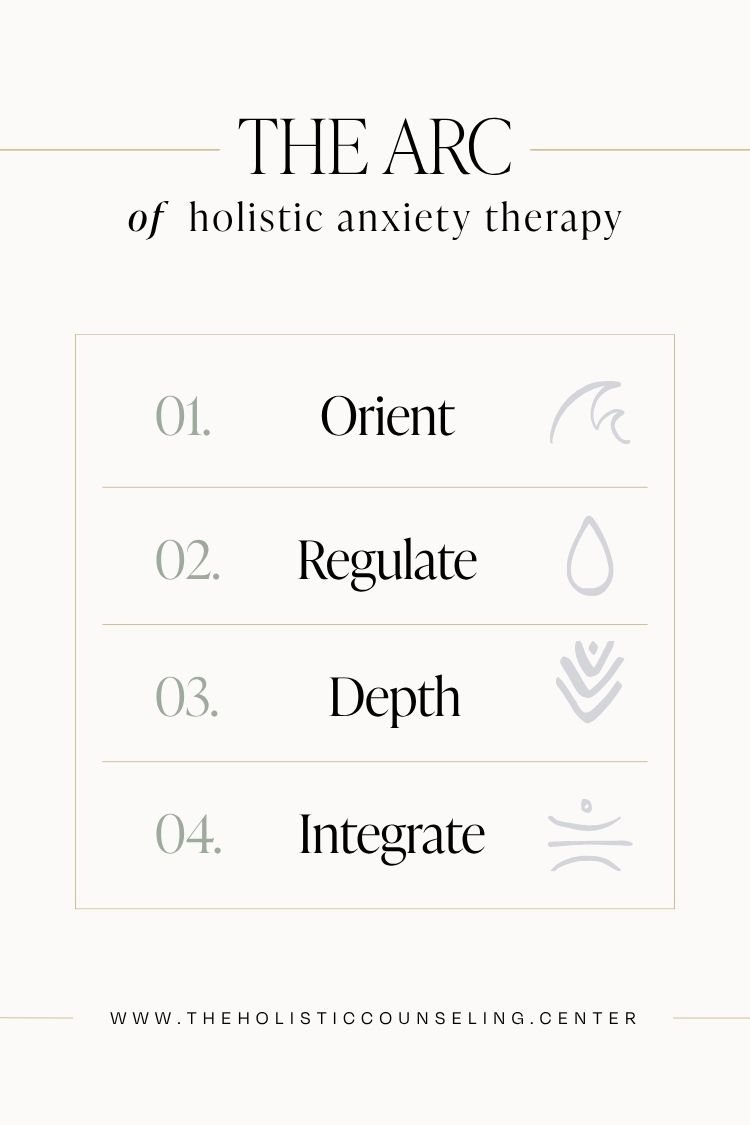
From there, holistic therapy for anxiety moves through three phases. First we look back, at your childhood, your key relationships, and the subtle and not so subtle experiences that shaped who you are. Then we map where you are now. Then we make a plan for where you're going.
Our therapists customize the tools for you, not for anxiety.
First, We Look Back
We're trying to understand your predicament, your circumstances, and what makes you uniquely you.
What happened to you, what you learned along the way, and what you've been carrying for far too long that was never yours to carry in the first place. We look at what you remember and what's conscious, and also at what's been buried in the shadows of the unconscious.
What do you talk about in therapy for anxiety?
More often than not, some version of these questions:
• Who am I really?
• What do I actually think about this situation, relationship or experience?
• How do I feel about this situation, relationship or experience?
• What do I really need?
• What do I really want?
• How do I actually get my needs met?
• How do I show up and be human in a way that aligns with my values?
These look like simple questions written down, but there is a lot to explore when you really dive in. Most of us have never been asked to attune to ourselves this closely, to our needs, our fears and our desires. And it takes space, time and a certain bravery to find the honest answers.
Then We Make a Map
We excavated the past to get a clear picture of how you got here. Now we look at what's actually happening in your life today. What your patterns are in relationship. Where you self-sabotage. When anxiety shows up, and what it looks like when it does, because that part is almost always uniquely yours.
So much of what holistic therapy offers is an opportunity to see yourself clearly. Who you are, where you've been, and where you actually are right now, without the distortion of the story you've been telling yourself about all of it.
And when anxiety is alive in your body during a session, we are not just going to talk about it. We're going to work with the body. We get up. We move. We breathe. We shift the energy instead of analyzing it.
Because anxiety isn't a problem to be solved. It's a signal from your nervous system, asking you to listen.
And what it's usually asking you to listen to are the feelings that got buried, hidden and stored away. Not because anything is wrong with you, but because you didn't have what you needed to hold it all at the time.
At the end of the day, your feelings don't need to be fixed, they just need to be felt.
Then We Make a Plan
Once there's real depth of understanding about what you're struggling with and how you got here, we can build the tools around your particular situation rather than handing you generic anxiety relief. A simple example: if you have a history of panic attacks, we don't start with certain kinds of breathwork, because they can be too activating.
And then you go back out and live your life, which is where most of the change actually happens. The practices between sessions aren't just homework. They're the reps. Therapy is where you learn what your particular system needs. Your daily life is where you rebuild your system, day by day, and breath breath.
If you've been to therapy before and this sounds like a different kind of therapy, you’re right, it is. Most therapy stops at insight. You can understand your patterns, but you're still anxious.
Here at The Holistic Counseling Center, our work goes deeper than insight, deeper than just just mental understanding. It asks you to feel the things that have gone unfelt, sometimes for twenty or thirty years. That is not something most of us can do alone. It's too painful and too disorienting. This is where therapy can help and scaffolds you through the healing journey.
There's one more layer to healing anxiety, and it's the one most conventional therapy leaves out: spirituality.
Can Spirituality Help Heal Anxiety?
Yes! If you're deep on a spiritual path, or curious about the deeper existential meaning of life, it's so important to bring this into therapy. And the research backs us up here. In 2018, a team of researchers pooled the results of 97 studies and found that spiritually integrated therapy works at least as well as standard therapy for reducing distress, and does more for a person's sense of spiritual well-being (Captari et al., 2018).
Why it helps has less to do with a particular belief itself and more to do with what belief gives you.
Researchers point to a sense of meaning during hard seasons, a way of making sense of loss, and belonging to something that shows up for you (Koenig, 2012). At the heart of spiritual practice is an invitation to know yourself more deeply and to anchor into something larger, so that you move through hard things with more skill and suffer less along the way.
That doesn't mean being grateful for your anxiety. Telling someone who is suffering to find the gift in it is dismissive, and it can do real harm. What I mean is turning toward the suffering with some faith that something larger might be unfolding, that it might have something to teach you, and that you are not alone in dealing with it.
But spirituality isn't always soothing.
You could have the most blissful meditations, a devoted yoga practice, or years of consistent scripture reading and still not touch the anxiety living in your system. Usually that's because the two have been kept in separate rooms. The spiritual practice happens over here, the anxiety happens over there, and there’s no line of communication between them.
And sometimes it goes further than that. Someone deeply committed to their practice starts to believe their anxiety means they're failing. The thoughts show up sounding like: What more do I have to do to get rid of this? What am I doing wrong? Maybe I'm not meditating enough. Maybe I'm not praying enough.
This is spiritual bypassing, and it's worth knowing about. It's when we use or expect our spiritual practices to keep us from suffering. Research on ‘religious struggle,’ meaning things like feeling punished or abandoned, or wrestling with questions of meaning, finds that it travels alongside more anxiety, not less (Ano & Vasconcelles, 2005).
At the core of spiritual therapy and a spiritual approach to healing anxiety is that there is something here that supports us, and we are not alone in it. Call it God, call it love, call it the frequency of healing or Source energy. You don’t even have to believe in a higher power, you can just be curious about it all and honor the unique journey you are on to find your own truth.
Holistic therapy for anxiety here at The Holistic Counseling Center is a space to explore every aspect of being human, including the deeper existential and spiritual realms.
So much of anxiety is a mind trying to answer questions that don't have answers yet.
Part of what holistic therapy offers is the practice of sitting with the mystery instead. Learning to be with the not knowing, without needing to resolve it, turns out to be its own kind of medicine.
Which brings us to a practical question underneath all of this. What kind of therapy actually does this work?
What Is the Best Therapy for Healing Anxiety?
The truth is, there isn't just one. I wish I could say with certainty what kind of therapy would 100% help you, but that wouldn’t be honest.
The best therapy for healing anxiety is the one that fits your nervous system, your temperament, your personal history, and what kind of work you're actually capable of engaging with right now.
Some of the most well regarded therapies for healing anxiety that we offer here include:
• Cognitive Behavioral Therapy (CBT), the most studied approach for anxiety and the one with the deepest research base behind it.
• Mindfulness-based therapy, which held its own against a first-line anxiety medication in a 2023 randomized trial.
• Somatic therapy, for the anxiety that lives in the body and doesn't respond to talking about it.
“Your feelings don’t need to be fixed, they just need to be felt. ”
• EMDR, for anxiety with a clear traumatic root that keeps getting re-triggered.
• Brainspotting, for reprogramming the anxiety in the mind-body wiring.
• Internal Family Systems Therapy (IFS), or parts work, for the anxiety that shows up as an inner critic or a protector.
• Psychodynamic and depth therapy, for the patterns that started long before you had words for them.
We practice all of these at The Holistic Counseling Center. What makes us holistic isn't just a list of modalities, it’s that we weave them together instead of picking just one and hoping it works for you.
How Long Does It Take to Heal Anxiety?
Healing isn't linear. It's a process and a practice of coming home to yourself, and it doesn't have a tidy beginning and end.
I wish there was a definitive answer to how many therapy sessions it takes, but you deserve a real answer, so here's mine.
In the first few sessions, you'll start learning things you can use right away. We'll work together to find the tools that actually fit for you, and you'll leave with something tangible you can practice and implement.
Within the first few weeks, those skills start to land. This is usually where people notice real shifts in their life.
Over the first three to six months, you're learning to be skillful with the tools you now have. Not just knowing about them. Using them, in your actual life, when you really need them.
And then you keep at it.
If you’re feeling frustrated with how long healing can feel sometimes, it can be helpful and humbling to take a moment to think about how long it took for these patterns to develop. For almost all of us, it's been years if not a lifetime. So breaking those patterns and fully rewiring the system is going to take time.
That doesn't mean you need to be in therapy for years before you feel better. It means the arc of change happens over a lifetime. You can start feeling better within a couple of weeks, see real changes in a few months, and then continue at your own pace, with therapy supporting you along the way when you want it.
Healing is becoming more skillful at dealing with the things that are hard in life, not that the hard things go away.
How Do You Know It's Working?
There's a slowing down. An increase in awareness. An expanded capacity for seeing yourself clearly, and for dealing with what's actually in front of you. You get out of your head and into your life. Out of your head and into your body.
And one honest reflection here: It can get messier before it gets better. That's because you're finally dealing with all the stuff. You're putting your feet in the water instead of standing on the shore watching the waves. You can learn a lot about surfing by watching someone else do it, but nothing replaces getting in.
Then, slowly, that tangled knot of nerves and stressors starts to release. It starts to soften. It starts to untangle.
What I see in clients is breathing a little deeper. Exhaling a little more. Smiling a little more. Able to look up and out at their life and actually see what's there. More present. More available for themselves. Less overwhelmed by the anxiety, and starting to feel genuinely capable.
What to Look For in a Holistic Therapist for Anxiety
Not every therapist works this way. If you're starting to look, here's what I'd want you to look for:
• Someone who asks about all aspects of your life, not just your symptoms
• Someone trained in more than one modality, who can move between them
• Someone who will work with your body, not only your thoughts
• Someone who makes room for your spiritual life and deeper experiences of meaning and life purpose
• Someone you like and feel connected with in your first session
Holistic Therapy for Anxiety in California
If you're still reading, you may be wondering how bad your anxiety has to be before you're allowed to ask for help. Or maybe you've been struggling so long that you've half given up on the idea that anything could really change.
What I really hope you hear today is that anxiety is a symptom, it's not a life sentence.
It's not permanent, and it doesn't mean there's something wrong with you. If you're struggling with any of what we've talked about here, I'm here with a gentle reminder that you don't have to keep suffering alone, and there is hope for healing.
We're accepting new clients for anxiety therapy and would love to support you. We offer in-person therapy in El Dorado Hills, San Anselmo, and San Francisco, and online throughout California.
Taking the first step is simple:
Schedule a Free Consultation Call: We'll explore how anxiety is showing up in your life and answer your questions.
Get Matched With a Therapist: We'll match you with an anxiety therapist who feels like a great fit for you. You can also speak directly with your recommended therapist before having a session.
Begin Your Journey: Have your first session and start feeling anxiety relief.
You are more than your thoughts, and you are more than your symptoms. With the right support, you can find the way back to yourself and your life, and you don't have to do it all alone.
Wishing you well on your healing journey.
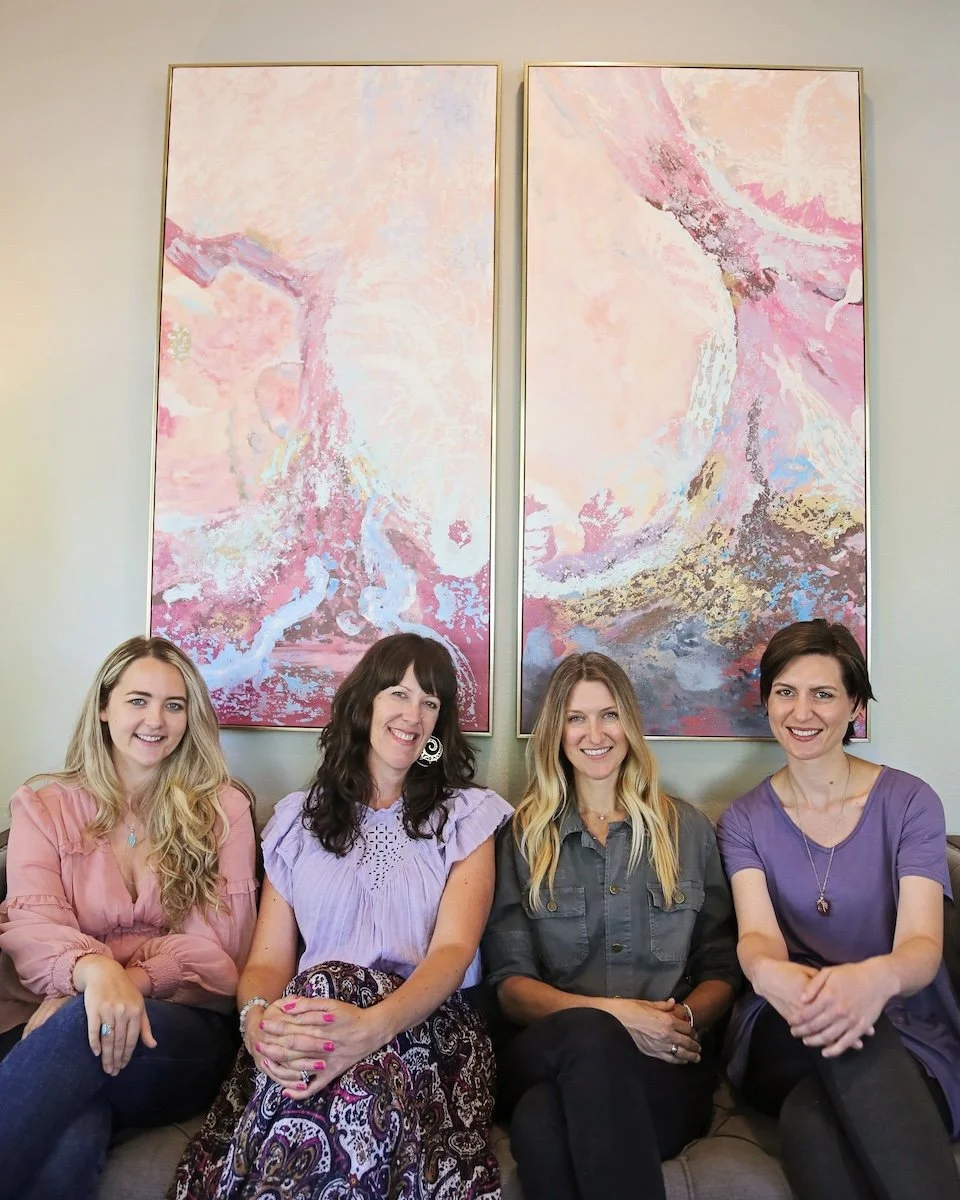
-Kim Burris, LMFT
Takeaway
Anxiety isn't a permanent condition. It's a signal from your nervous system that learned somewhere along the way to stay on alert, and it's asking you to slow down and listen. Healing means understanding where it came from, finding the tools that actually work for your particular system, and doing the deeper work of feeling what got buried along the way. Holistic therapy for anxiety can help you heal mind, body, heart and spirit. Reach out to get matched with one of our holistic therapists today.
Additional Resources
• The Spiritual Nature of Anxiety: A Holistic Therapist's Guide
• 6 Spiritual Symptoms of Anxiety
• 5 Holistic Practices for Healing Anxiety (Free Guide)
• 7-Minute Guided Meditation for Anxiety Relief (Free Meditation)
• Are You Using Spirituality To Hide From Yourself? You Might Be Spiritual Bypassing
• Understanding and Regulating Your Nervous System: A Holistic Approach
References
Ano, G. G., & Vasconcelles, E. B. (2005). Religious coping and psychological adjustment to stress: A meta-analysis. Journal of Clinical Psychology, 61(4), 461–480.
Arnsten, A. F. T. (2009). Stress signalling pathways that impair prefrontal cortex structure and function. Nature Reviews Neuroscience, 10(6), 410–422.
Berthoud, H. R., & Neuhuber, W. L. (2000). Functional and chemical anatomy of the afferent vagal system. Autonomic Neuroscience, 85(1–3), 1–17.
Bouton, M. E. (2004). Context and behavioral processes in extinction. Learning & Memory, 11(5), 485–494.
Captari, L. E., et al. (2018). Integrating clients' religion and spirituality within psychotherapy: A comprehensive meta-analysis. Journal of Clinical Psychology, 74, 1938–1951.
Fincham, G. W., et al. (2023). Effect of breathwork on stress and mental health: A meta-analysis of randomised-controlled trials. Scientific Reports, 13, 432.
Hoge, E. A., et al. (2023). Mindfulness-based stress reduction vs escitalopram for the treatment of adults with anxiety disorders. JAMA Psychiatry, 80(1), 13–21.
Koenig, H. G. (2012). Religion, spirituality, and health: The research and clinical implications. ISRN Psychiatry, 2012, 278730.
MacBeth, A., & Gumley, A. (2012). Exploring compassion: A meta-analysis of the association between self-compassion and psychopathology. Clinical Psychology Review, 32(6), 545–552.
Stubbs, B., et al. (2017). An examination of the anxiolytic effects of exercise for people with anxiety and stress-related disorders: A meta-analysis. Psychiatry Research, 249, 102–108.

About the author
Kim Burris, LMFT, is a licensed holistic psychotherapist, founder of The Holistic Counseling Center, and author of The First 90 Days After Birth. Her work has been featured in Vogue, Bustle, and the Daily OM.
She honors the mind-body-spirit connection and offers evidence-based psychotherapy with a heart-centered approach that helps people find relief from anxiety and self-sabotage so they can live life with more joy, freedom, and ease.
Kim and her team currently offer holistic counseling in El Dorado Hills, San Anselmo, and San Francisco, and online throughout California.
Click here to book a no-cost consultation call and get matched with one of our holistic therapists.
Disclaimer: This content is for informational purposes only and is not intended to be a substitute for professional medical advice, diagnosis, or treatment. Always seek the advice of your physician or qualified mental health professional.