

The Spiritual Nature of Anxiety
Originally Published: May 1, 2026
Anxiety doesn't ask for permission. It shows up with its loud, wild spin on life. It devastates the day and interrupts relationships. It tries every trick in the book to grab your attention. It's wondering if you're listening.
And here you are, trying everything you've been taught: Meditation. Breathwork. Medication. Journaling. Therapy. Changing your diet. Exercising more. Just the thought of everything you should do is making you anxious.
This is the downward spiral. The allure of peace, if you could just do the right thing.
The spiritual nature of anxiety is what most clinical models miss.
The problem is, there isn't one cure for anxiety. Because the root cause of anxiety isn't obvious. It's not just a chemical imbalance in your brain. It's not just a mindset problem you can think your way out of.
The heart of anxiety lies deeper. In the space between the head and the heart. Between your path and your patterning. It's spiritual.
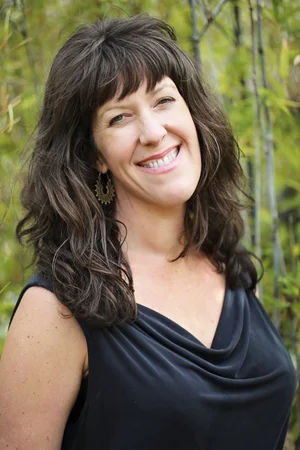
Hi, I'm Kim Burris, a licensed psychotherapist specializing in a holistic approach to treating anxiety. For over a decade, I've sat with people who've done everything right clinically and still feel like something deeper is asking for their care and attention.
I know the healing journey isn't linear. I know mental health isn't just about your mind. And I know that treating anxiety without space for deep, existential exploration typically won't work.
If you've landed here searching for the spiritual nature of anxiety, you're not lost. You're listening.
Your anxiety may not only be a clinical condition to manage. It might also be a signal. A messenger. A knock on the door of a deeper part of yourself that has something to say.
This article is for anyone who senses something deeper is happening underneath their symptoms, and is ready to meet it.
Not get rid of it. Not bypass it. Meet it.
It's time to listen.
What is the Spiritual Nature of Anxiety?
When you start listening, the first place you'll tune into is the body.
You might notice the breath that stays shallow. The belly that never fully releases. The shoulders that never really drop. There's this low hum of bracing for what's next, even when nothing stressful is actually happening.
The spiritual nature of anxiety is the experience of being disconnected from meaning, from purpose, from your own deeper knowing. It's the ache that hasn't found words yet. The sense that you're moving through life without an anchor. It can show up alongside clinical anxiety, underneath it, or in places it hasn't fully named.
And underneath the bracing, a quiet, relentless question shows up at 11pm when you can't sleep, or in the car after yoga, or in the middle of a Tuesday you had no apparent reason to dread: is this all there is?
That question is not a symptom. It's an invitation.
Spiritual anxiety is the experience of being disconnected from meaning, from purpose, from your own deeper knowing. It's the ache that hasn't found words yet. The sense that you're moving through life without an anchor. It can show up alongside clinical anxiety, underneath it, or in places it hasn't fully named.
Spiritual here doesn't mean religious. It can hold deep faith, and it can exist outside of any tradition. The spiritual meaning of anxiety, through this lens, is about your relationship with meaning, with purpose, with the part of you that knows there's more.
For a closer look at how spiritual anxiety actually shows up in daily life, see 6 Spiritual Symptoms of Anxiety.
At the heart of spiritual anxiety is the sense that you’ve been uprooted from your source.
Spiritual Anxiety vs. Clinical Anxiety
If you've been to therapy for anxiety, you know the drill. You name the racing thoughts, the unexplained heaviness in your chest, the 3am spirals. You're handed a diagnosis: Generalized anxiety disorder. Panic disorder. Acute stress disorder. You're given a treatment plan: cognitive tools, mindfulness skills, sometimes medication. You learn to manage some of the symptoms.
This is the medical model. Helpful? Yes. This approach can save lives and triage acute crises and mental health emergencies. Is it the approach for root cause healing? Nope.
The medical model knows how to name what's happening on the surface. The racing heart. The intrusive thoughts. The avoidance. What it doesn't always have language for is what lives underneath. The disconnection. The ache with no obvious trigger. The sense that something deeper is asking for your attention, and the symptoms are how it knocks.
This is where the existential tradition picks up.
In 1952, the theologian Paul Tillich named three forms of anxiety: ontic (the threat of death and finitude), moral (the threat of guilt and condemnation), and spiritual (the threat of emptiness and meaninglessness). Spiritual anxiety, Tillich argued, is the defining anxiety of modern life.
His student, the psychologist Rollo May, drew a parallel distinction in clinical psychology:
Normal anxiety is the response of a human being awake to their own freedom, their own mortality, their own capacity to become. It cannot be cured because it is not a problem. It is the signal of being alive.
Neurotic anxiety is the disproportionate kind. The kind that needs defenses. The kind that produces symptoms.
And here is one of May's most important offerings: neurotic anxiety is often the result of trying not to feel normal anxiety. The clinical symptoms we treat are sometimes how the body metabolizes what wasn't safe to feel directly.
What May called normal anxiety is close to what I’m calling spiritual anxiety. The signal, not the symptom. The aliveness, not the pathology. Two generations of one tradition, naming the same thing.
When we treat anxiety only through the medical model, we treat the symptom and miss the signal. We get the relief but lose the message. We miss the depths. We miss the subtleties. We miss the resourcing.
For a deeper look at where the medical model can leave people stuck, see Beyond the Medical Model: How Holistic Therapy Heals.
Spiritual anxiety isn’t clinical anxiety. It lives underneath it. Around it. Alongside it. Your panic is real, and so is the ache that has been there for years. Your insomnia is real, and so are the questions keeping you awake all night.
Both, always. Never just one.
Where Does Spiritual Anxiety Come From?
If spiritual anxiety lives underneath clinical anxiety, the next question is the obvious one: Where does it actually come from?
Underneath the racing heart, the rumination, the disconnection, sometimes we have to dig pretty deep. And under that, for a lot of people, there is a pit in the stomach. A quiet ache. The sense that something at the very heart of your existence is missing. You may not have words for it yet. But the questions are there:
Why am I here? Why am I suffering? Is there a way through it? What is the meaning of my life?

These are the existential threads. The great mystery. The big questions the contemplative traditions have always asked. They live underneath a lot of our anxiety. Not as the only source, but as a layer most clinical models leave out.
Viktor Frankl, the Viennese psychiatrist who survived the Holocaust, called the modern absence of meaning the existential vacuum. The frustrated need for meaning, he argued, is not a consequence of anxiety and depression, it is often a cause of them. When the question of meaning goes unanswered, it doesn't just go quiet. It waves its arms, desperate to get your attention through symptoms.
And the research has caught up. A 2023 meta-analysis in the Journal of Clinical Psychology found that purpose in life correlates with significantly lower anxiety, with the strongest effect in people with clinical anxiety diagnoses. Translation? Meaning is not just a nice-to-have. It is a measurable protective factor.
So where does spiritual anxiety come from?
Try this: Pause and feel into it.
At the heart of it all: We are tiny specks. Humans on a rock spinning through space. Microscopic beings if you zoom out and look from the perspective of the galaxy.
When you actually pause and let that land, it tends to go one of two ways. (And sometimes it’s a bit of both.)
One is something like liberation: Nothing really matters. We're only here for a moment. Exhale. The constantly changing nature of the universe somehow frees something in us.
The other is the seed of anxiety: We feel scared. We feel uncomfortable. We feel like we are out of control. Same fact. Opposite landing.
The difference, almost always, is whether you have anywhere to drop in and anchor.
Anchoring looks like being connected to source, to meaning. It means you can connect to a deeper sense of trust, to divine design, to some thread of the existential mystery that is this human experience. When you lack this connection, you can feel deeply uprooted.
You don't have to call source God. You don't have to call it the Universe, or the Self, or the divine, or anything at all. How you define source is deeply personal. What matters is whether you have a felt sense of something larger than yourself, and a felt sense of meaning inside your own life that is connected to it.
When that connection is intact, the cosmos can be liberating.
When it isn't, the cosmos becomes terrifying.
The cosmos hasn't changed. What's changed is whether you have somewhere to anchor.
Healing is Not About Transcending. It's About Reconnecting.
If spiritual anxiety is the feeling of being uprooted from source, healing is all about reconnecting.
It's not about transcending the body and the mess of being human. It's not about getting to some higher plane where the anxiety finally stops. Move too far in that direction and you can actually pop out of your body. The anxiety gets worse, not better.
Healing is about coming home to yourself.
And there are three places in the body where this work lands. The head, the heart, and the body. In yoga, these map to the third eye and crown, the heart, and the root chakras (energy centers). Three places where consciousness and embodiment meet. Three places where you either stay aligned or get severed from source. Three places the nervous system is either humming along or full of static.
The Head
We start here because the head is usually running the show.
The mind has wisdom. Real wisdom. When it's in its right place in the circuit, it integrates, it processes, it lets thoughts move through. The head is where clarity lives. Where intuition can finally take shape. When the mind is aligned, not in charge of everything but in relationship with the heart and the body, it becomes the most beautiful instrument.
But most of us walk around with our minds running the show. The head is loud. It interrupts every quiet signal the rest of the body is trying to send. You can't hear the heart when the mind is this loud. You can't feel your anchor.
This is where anxiety lives for most people. The mind taking over. The endless thoughts looping. The inner narrator that just won't stop. And of course, the more you try to think your way out of anxiety, the louder the mind gets.
Aligning with the energy of the head means letting the mind do its actual job. Processing. Integrating. Noticing. Thinking. Not gripping. Not solving. Not controlling. Opening so that wisdom can flow in and down.
Spiritual traditions can be quick to dismiss the mind with sayings like: Quiet your mind. Empty your mind. As if the mind is the problem. It's not. The mind running the show is the problem. The mind in flow, in right relationship to the body, is one of your greatest tools on the healing journey.
The Heart
The heart is the bridge between the soul and the body. It's where cosmic knowing meets embodied presence. It's where spiritual awareness becomes human feeling.

When the heart is open, the circuit moves. Energy that's been stuck in the head finally has somewhere to go. The heart is what makes the 'in and down' possible. The literal heart of the circuit.
But the heart alone isn't enough. Heart energy without the head can lead to emotional overwhelm without a space for processing. When you feel everything, with no way to metabolize it, the body becomes heavy, burdened. Heart energy without the anchor of the body is open but untethered. You can feel the expansiveness, but you might not have a grounded body to hold it in.
Attuning to the energy of the heart means letting yourself feel. Letting yourself love. Letting yourself grieve. For many of us, this is the scariest of the three. Because when you let the heart open, you have to feel everything, including the places you've been hurt, the places you've been disappointed, the places you've been alone.
This is where so much of your anxiety can hide. Anxiety that's really grief. Anxiety that's really loneliness. Anxiety that's really a broken heart you haven't been able to metabolize yet.
The Body
The body is where we anchor.
The body is the human container for the wild adventure we are having as spiritual beings on this planet. The pelvis, the legs, the womb, the hips, the feet. The body is what connects us to gravity, to the earth, to the simple fact that we are here, in this body, on this rock spinning through space. It's the downward force that keeps you in your body. The root. The anchor.
The body is also the seat of safety. Not cognitive safety. You can tell yourself you're safe and still feel terrified. Actual nervous-system safety. The kind of safety that lives in the cells of your body, in vagal tone, in interoception, in the quiet felt-sense of being okay in your own skin.
And this is the piece many spiritual paths skip. They reach for the crown and the energy of bliss. They focus on the expansive, the cosmic, the transcendent. Meanwhile the body, the place where you learn to feel at home in your own skin, gets left behind.
Polyvagal research has given us the language for what many traditions have always known. We can only go as deep spiritually as our nervous system feels safe to go. The body is the ground of that safety. When you're aligned with the body, you have access to all of it. The wisdom of the body. The intuition. The capacity to stay present with what's hard without leaving the body.
When you're disconnected from this anchor, you can become a stranger to your own body. You reach for the spiritual but have nowhere to land it. And this ungroundedness itself is often what fuels the anxiety.
The Three Together
Head alone, disconnected from heart and body, becomes spiritual bypassing. All ideas, no embodiment.
Heart alone, disconnected from head and body, becomes overwhelm. All feeling, no grounding.
Body alone, disconnected from head and heart, becomes survival mode. All safety, no flow, no deeper meaning.
The healing journey is about integrating all three.
The head processes. The heart bridges. The body anchors.
What I see in the therapy room, when all three are open and connected, is that clients start to access the wisdom that lives in each place. They make sense of things in a new way. They feel things in a new way. They move through life in a new way. And their relationship with anxiety changes.
And it's not that anxiety just magically disappears. The big waves still come, and you can ride them. It's that the expansive energetic bursts that used to look like panic attacks and other spiritual symptoms of anxiety become less and less, because the nervous system itself is expanding and learning to hold more.
To be clear: Being aligned and in flow doesn't mean you stop suffering. It means you have the tools to meet the suffering without drowning in it. It means you can feel deeply without falling apart. It means you can think clearly without the thinking taking over. It means you can be here, in this body, on this earth, and not get stuck in the head or disconnect from your body every time life gets hard.
This is what reconnection actually looks like.
How to Heal Spiritual Anxiety with Holistic Therapy
So how do you actually do this work?
When the head is loud, the heart feels heavy, and your body has gone quiet again, you don't need more information, another tool or fancy technique. You need permission. Permission to slow down, tune in, and listen.
Because no matter how insistent the mind is, you can't think your way into reconnection.
The mind is part of the circuit, but it isn't the doorway. The doorway is the body. More specifically, the nervous system. There are neural circuits in the body that signal safety, connection, and presence. The same circuits that ancient practices have targeted through breath, chanting, and stillness are the ones modern science has finally acknowledged and mapped.
Nervous system regulation isn't separate from spiritual work. It's the doorway into it.
This is why energy work alone, or meditation alone, or prayer alone often won't reach the layer where spiritual anxiety lives. It isn't that those practices don't work. It's that without nervous system safety underneath them, the body can't actually receive what they offer. You meditate and the racing thoughts intensify. You pray and feel further from God. You do the breathwork and panic moves in. The practices that are supposed to work often don't work if the foundation isn't ready. It doesn't mean you're doing something wrong. It just means there's another way in.
Healing spiritual anxiety asks for both: The clinical scaffolding that helps your nervous system feel safe enough to open. And the spiritual depth that gives the opening somewhere to go.
This is the both/and that holistic therapy is built around. At The Holistic Counseling Center, our therapists weave traditional psychotherapy with somatic modalities, nervous system regulation tools, and psychospiritual practices. Not as a sampler plate of techniques, but as an integrated approach that meets and treats the whole person: head, heart, body and soul.
The work is also collaborative and unique for each person. There's no one size fits all approach to treating anxiety, or any mental health condition. Best practices? Yes! A modality that works for everyone? Unfortunately no.
A skilled clinician trained in this territory holds the both/and so you don't have to. They have the nervous system literacy and somatic training to track what's happening in your body. And they hold the existential and spiritual frame to honor your unique spiritual journey. Our holistic therapists know when to titrate, when to deepen, when to slow down, and when to hold steady. The therapeutic relationship itself becomes one of the strongest co-regulation tools your nervous system has access to.
For a deeper look at how holistic therapy treats anxiety, see Healing Anxiety with Holistic Therapy. To learn more about the services we offer, visit our anxiety therapy and spiritual therapy pages.
Ready for support?
Book a Free Consultation Call
to get matched with a holistic therapist.
Learning to Listen
Healing anxiety is about learning how to listen. Not another task to accomplish, but more of an invitation. To drop in. To tune in just a little more, a little deeper, a little closer to what your head, heart, and body are trying to tell you.
The movement is in and down. From the head into the heart. From the heart into the body. Each layer asks something different of you, and each layer carries wisdom the others don't. When you can listen to all three, anxiety stops being a problem to solve and becomes a signal to tend to.
An invitation: Start by noticing the quality of what you're hearing.
The mind tends to be loud. It shouts, it loops, it fills every quiet space with explanation. The heart is quieter. It speaks in whispers, in tugs, in the felt sense of what's true under the noise. The body shows. Sometimes it shows up as pain. Mostly it shows up as a slow, steady knowing that takes time to recognize.
The mind shouts. The heart whispers. The body shows.
When you're activated, when the anxiety is rising, the practice is to slow down enough to hear all three. To drop in. To let the listening move from the head, into the heart, into the body.
Listening to the mind is the easiest place to start. And my favorite practice for this is journaling. It’s popular because it works! Get the loud thoughts out of your head and onto the page. Write until the noise quiets enough that you can hear underneath it. Write to release, not to reread.
Listening to the heart asks for a different practice. The heart whispers, it can be harder to hear. You have to slow down to hear it. What helps? Movement. Stillness. Turning inward. A walk in nature, a few minutes outside on the grass, time spent looking at trees, at sky, at water. Meditation. Contemplative practice. Sitting and doing nothing on purpose.
Listening to the body asks for the most patience. Many of the same practices that open the heart also open the body. Movement. Stillness. Sound. Chanting, mantra, singing, even a primal scream when nothing else will do. The body responds to vibration in a way the mind doesn't.
If you need a place to begin:
Journal. Get the loud thoughts onto the page.
Sit in stillness. Get outside if you can, or find a quiet spot indoors.
Tone. Find a long, steady sound. OM. AH. A single note. Let it move through you.
That's enough. You don't need a thirty-day program. You don't need to do it all. You need one practice and a willingness to come back to it.
And here's a gentle reminder: no single practice will fix everything. Ten minutes of chanting won't rewire a lifetime of patterning in a week or a month or even a year. The work is finding what fits your body, your nervous system, your temperament, your particular struggles. That isn't something you figure out in a weekend. It's a practice that develops over years.
But you don't have to know what works yet. You just have to start listening. The rest follows.
An Invitation
More than anything else, this is what I want you to leave with today: It's time to listen.
To your own head. Your own heart. Your own body. The places where the wisdom lives.
I'm not here with promises of a quick fix, or the perfect modality that will solve all your problems. I'm here with an invitation. To learn how to tune in. To tend to what's been waiting in you all along.
Spiritual anxiety isn't a sign that something's wrong with you. It's a signal that something is asking for your attention. And healing doesn't mean the pain disappears. It means you learn to turn towards it and meet it. It means you can slow down enough to hear the messages trying to get through.
There's no perfect. There's no done. There's just taking the next step.
The wisdom is yours. The listening is the practice. Trust yourself.
Your Healing Journey Starts Here
No matter how intense your anxiety symptoms are, healing is possible.
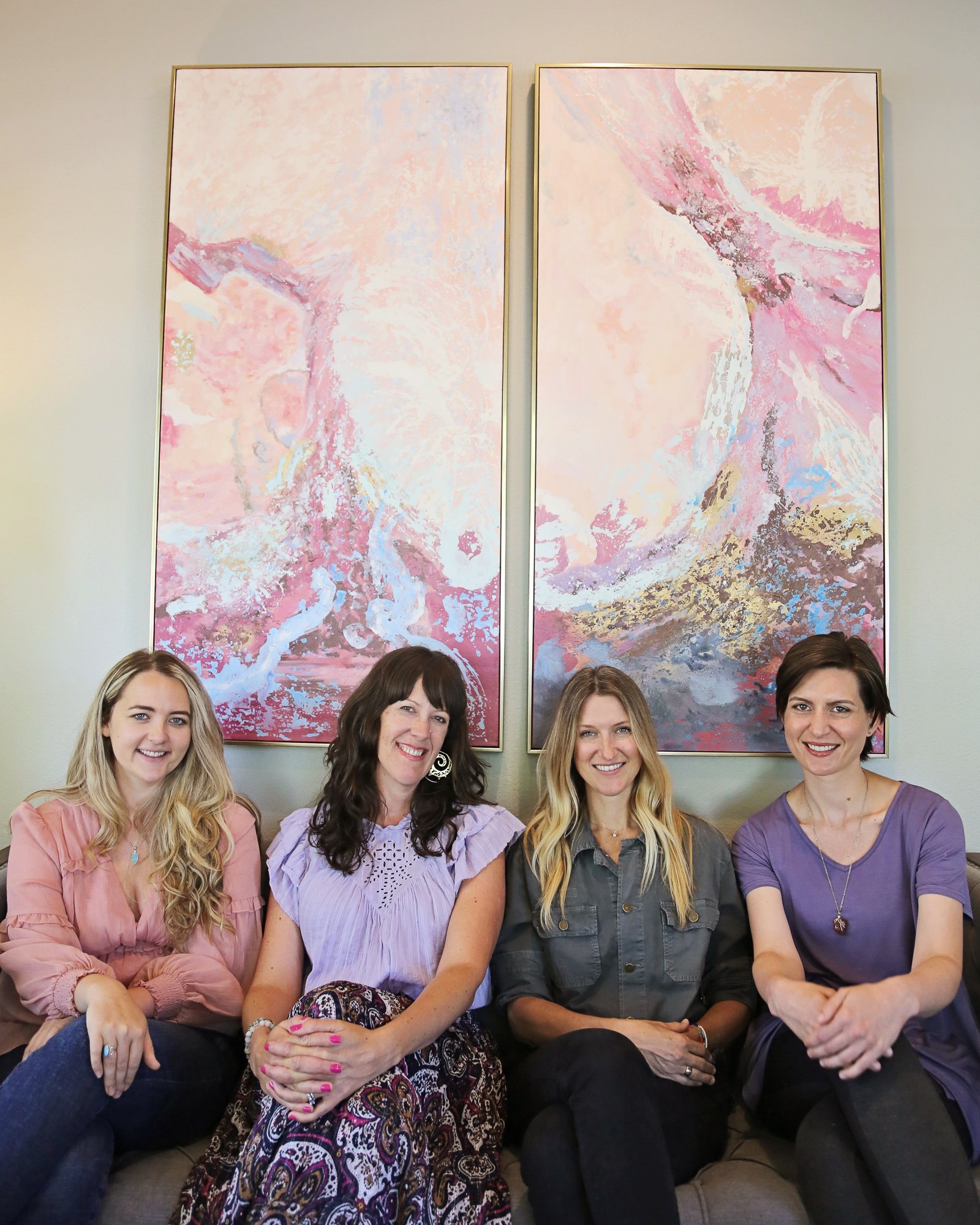
The healing journey is a continual process of self-discovery, growth, and learning to come back home to yourself. And you don’t have to navigate it alone.
Our therapists weave traditional psychotherapy with somatic modalities, nervous system regulation tools, and psychospiritual practices, to unearth and treat the root cause of your anxiety, not just manage symptoms.
We're currently accepting new clients for anxiety therapy online throughout California and in-person in San Francisco, San Anselmo, and El Dorado Hills with evening and weekend appointments available.
Taking the first step is simple:
Schedule a Free Consultation Call: We'll explore what's bringing you to therapy and answer your questions.
Get Matched With a Therapist: We'll match you with a clinician who feels like a great fit for you. You can also speak directly with your recommended therapist before having a session.
Begin Your Journey: Have your first session and start finding the relief and clarity you've been looking for.
Takeaway
The spiritual nature of anxiety lives in the disconnect between your head, your heart, and your body. Healing isn't about transcending, fixing, or ignoring those places. It's about learning to listen to them. When you learn to listen to all three, your relationship to anxiety changes. Not because the waves stop coming, but because you have somewhere to anchor when they do.
Additional Resources
References
Boreham, I. D., & Schutte, N. S. (2023). The relationship between purpose in life and depression and anxiety: A meta-analysis. Journal of Clinical Psychology, 79(11), 2736–2767.
Frankl, V. E. (1946/2006). Man's search for meaning. Beacon Press.
Masters, R. A. (2010). Spiritual bypassing: When spirituality disconnects us from what really matters. North Atlantic Books.
May, R. (1950/1977). The meaning of anxiety (Rev. ed.). W. W. Norton.
Porges, S. W. (2007). The polyvagal perspective. Biological Psychology, 74(2), 116–143.
Tillich, P. (1952). The courage to be. Yale University Press.
Welwood, J. (1984). Principles of inner work: Psychological and spiritual. Journal of Transpersonal Psychology, 16(1), 63–73.

About the Author
Kim Burris, LMFT is a licensed holistic psychotherapist, founder of The Holistic Counseling Center, and author of ‘The First 90 Days After Birth.’ Her work has been featured in Vogue, Bustle, and the Daily Om.
Kim honors the mind-body-spirit connection and offers evidence-based psychotherapy with a heart-centered approach that helps people find relief from anxiety and self-sabotage so they can live life with more joy, freedom, and ease.
Kim and her team offer holistic counseling throughout California: in San Francisco, San Anselmo, El Dorado Hills and online. Book a free consultation call to get started.
Disclaimer: This content is for informational purposes only and is not intended to be a substitute for professional medical advice, diagnosis, or treatment. Always seek the advice of your physician or qualified mental health professional.

Recent Blog Posts:



Anxiety isn't all in your head. A licensed holistic therapist on healing anxiety at the root: your nervous system, what helps, and what therapy can do.