


EMDR Therapy in El Dorado Hills, Marin, SF + Online
Evidence-based trauma therapy to help you heal


What is EMDR?
Maybe it's the memories that flood your body before your mind can stop it, or the way certain moments send your nervous system into overdrive even though you know you're safe now.
You’ve been carrying the pain long enough.
EMDR (Eye Movement Desensitization and Reprocessing) is an evidence-based therapy that helps your brain do what it was designed to do: process painful experiences and let you live your life again.
When something painful happens, your brain doesn't always metabolize the memory. It can get stored in a raw, unprocessed form, still carrying the full emotional charge of the original event. That's why certain sounds, images, or situations can overwhelm you with feelings.
When the past is still living in your nervous system, it can feel as if the danger is happening right now.
EMDR helps your brain access those stuck memories and reprocess them so they lose their emotional intensity. The memory doesn't disappear, but it stops running the show. And unlike traditional talk therapy, you don't need to describe the traumatic event in detail or relive every painful moment for the healing to happen.
At The Holistic Counseling Center, we offer EMDR to help people heal from trauma, anxiety, and deeply rooted emotional stressors. We believe that your brain and body have an innate capacity to heal, and sometimes they just need the right conditions to do it.
No matter what you're struggling with, healing and change are always possible.
If you're ready for support, schedule a free consultation call to learn more about our practice and how we can help.
"The purpose of EMDR treatment is to help liberate the client from the past into a healthy and productive present." — Francine Shapiro


At The Holistic Counseling Center, we offer EMDR as part of our holistic approach to psychotherapy. We don't see it as a one size fits all solution. We see it as a powerful tool that can accelerate and deepen the healing process.
How we approach EMDR Therapy:
Clinically Grounded, Spiritually Informed EMDR is one of the most rigorously researched trauma treatments available, recommended by the World Health Organization and the American Psychiatric Association. We offer EMDR as part of therapy that honors the mind-body-spirit connection. This means we honor and work with who you are beyond your symptoms, your diagnosis, and your history. We recognize the spiritual dimension of your healing journey, not as an afterthought, but as an essential part of who you are and how you heal.
More Than Symptom Management EMDR provides a container, a clear, structured process that can anchor deeper work, not just relieve your symptoms. We use it to get beneath the surface, to the memories, the patterns, and the body's signals that are driving your distress. For people who feel like therapy is "just a lot of talking" or who want something more focused, the protocol-based nature of EMDR can feel grounding. The goal here is root-cause healing, not just symptom relief.
You Are Not Your Diagnosis We see your struggles as messages worth listening to, not as evidence that something is wrong with you. EMDR helps us work with those messages directly, processing the memories and experiences underneath the symptoms so you can reconnect with who you actually are beneath the pain, the patterns, and the protective layers. Our work honors you as a whole person, and we're here to help you build the self-trust and self-love that are foundational to the healing journey.
Practical Skills + Deep Inner Work EMDR doesn't live in a silo here. Our therapists are trained in multiple modalities, which means your therapist might use IFS to identify which parts of you are carrying the pain, somatic therapy to track what's happening in your body, and EMDR to help your brain reprocess the memory itself. The modalities work together because healing isn't one-dimensional. You'll walk away from sessions with tools you can use right now and a deeper understanding of yourself that makes healing and change possible.
Take the next step on your healing journey. Reach out to get started with one of our EMDR therapists.

EMDR at The Holistic Counseling Center


How Does EMDR Therapy Work?
EMDR uses bilateral stimulation (guided eye movements, tapping, and/or auditory tones) to help your brain access and reprocess memories stuck in your nervous system. At the heart of this work is giving your brain the conditions it needs to do what it already knows how to do: heal.
Here's what EMDR looks like in the therapy room:
First, we build the foundation. Before any processing begins, your therapist gets to know you, your history, and what you want to work on. Together, you'll build tools for staying resourced during the process, so your system has what it needs to stay grounded without becoming overwhelmed. You won't be asked to go anywhere you're not ready to go.
Then, we process. Your therapist will guide you to be with a specific memory, feeling, or sensation, supported with bilateral stimulation. You don't need to describe the event in detail or narrate what happened. The stimulation helps your brain reprocess the memory at a level deeper than words. As it does, the emotional charge begins to shift. What once felt overwhelming becomes something you can engage without being overtaken by it.
After, something has changed. Clients often describe the experience as the memory still being there, but feeling different. Quieter. Less charged. Like it finally got filed away instead of replaying on a loop. The memory doesn't disappear, but it loses its grip on your body and your nervous system.
EMDR follows a structured protocol that gives the work a clear beginning, middle, and end. For people who want to know there's a map for the process, that structure can feel grounding and reassuring. Your therapist checks in at every step, and you're always in control of the pace.
Ready to get started with EMDR Therapy? Book a free consultation call to get matched with one of our EMDR therapists.
Benefits of EMDR Therapy
EMDR therapy can create real change in your mind-body-heart-spirit.
Here are some of the benefits people experience:

The past becomes the past.
Memories that once hijacked your day, your mood, or your body begin to feel like memories instead of emergencies. The emotional charge fades. You can think about what happened without being pulled back into it.
Your nervous system comes back online.
The hypervigilance, tension, sleeplessness, and the feeling of always being on alert gets reprogrammed. EMDR can help your nervous system move out of survival mode and settle back into safety.
Negative beliefs get rewired.
Trauma doesn't just leave emotional scars, it leaves stories: I'm not safe. It was my fault. I'm not enough. EMDR helps your brain replace these deeply held beliefs with ones that are actually true.
Healing feels tangible.
The changes ripple out into many areas of your life. You might notice less emotional reactivity, more presence with the people you love, and a deeper sense of trust in yourself and your body.

What Issues Can EMDR Treat?
Anxiety + Stress
Trauma + Healing

Is EMDR Right for You?
EMDR isn't just for "big T" trauma.
It can be helpful for the experiences that might not seem dramatic enough to qualify as trauma but still shape how you move through the world: a painful breakup, a shameful interaction, a pattern of criticism from a parent, the slow accumulation of feeling not good enough. If a memory still carries an emotional charge when you think about it, EMDR can help.
EMDR might be especially helpful if you:
Have tried talk therapy but still feel "stuck" on activating memories or patterns
Notice that certain experiences still carry a strong emotional charge, even years later
Experience flashbacks, nightmares, or intrusive thoughts connected to past events
Want a more structured, focused approach to processing specific painful experiences
Feel like your nervous system is stuck in survival mode and you can't think your way out of it
Are looking for a therapy that doesn't require you to describe every detail of what happened
You don't have to keep living with the weight of something your brain hasn't been able to process.
If you're curious how EMDR can support your healing journey, schedule a free consultation call to learn more about our practice and how we can help.
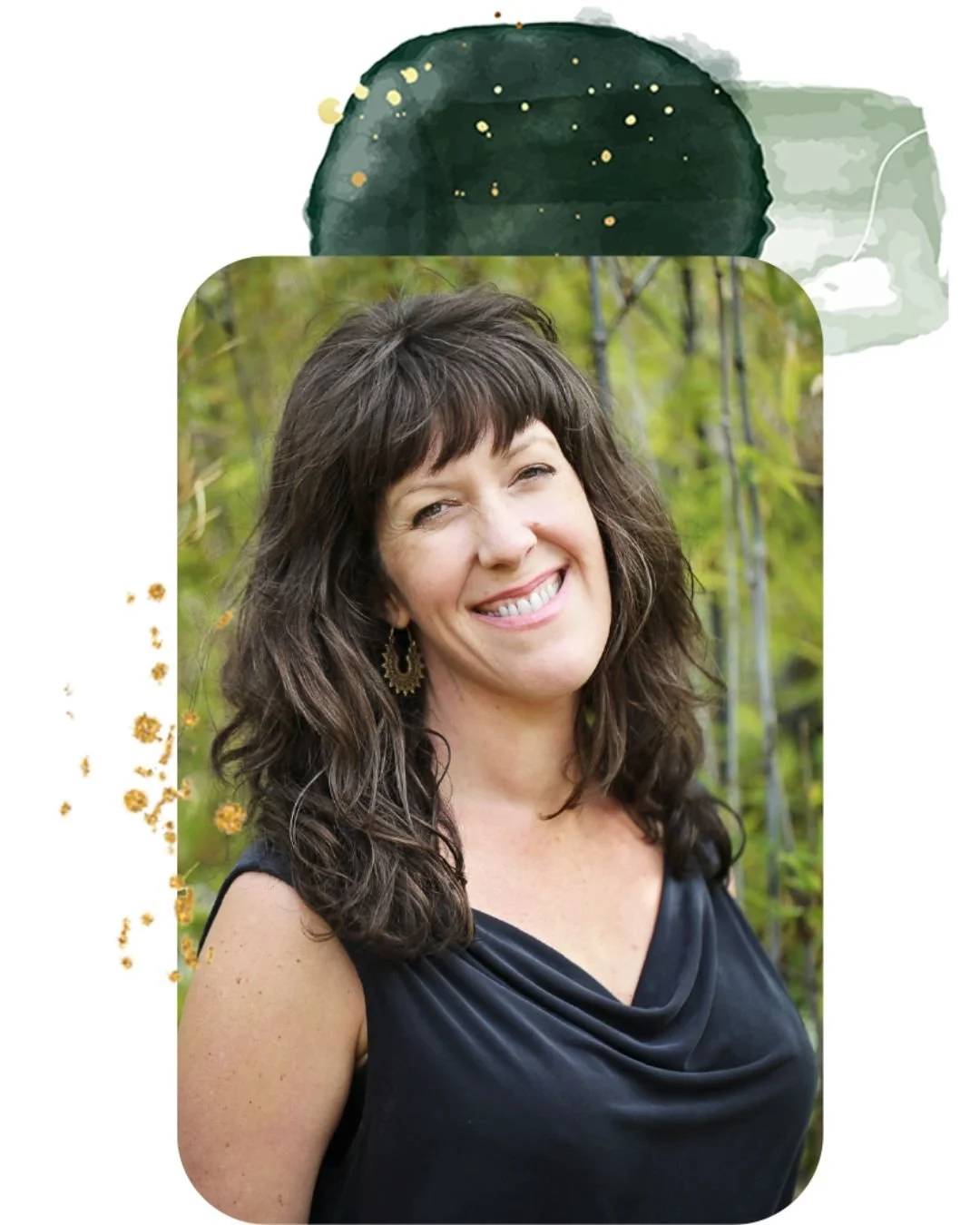
Hi, I’m Kim Burris
Founder of The Holistic Counseling Center and A Licensed Therapist
I believe that being human is a practice and that we all need support.
If you've been wondering whether healing and change is actually possible for you, I want you to know: it is. And you don’t have to figure it out all alone.
EMDR is one of the most respected modalities for trauma treatment for a reason: it works. Your brain and body do know how to heal, and EMDR supports the process.
If you’ve been carrying painful experiences for too long, and looking for a way through, it’s time. Our EMDR therapists bring clinical expertise and real heart to this work. There's nothing about you or your experience that is too much, too messy, or too hard. We see you, we honor you, and we'll walk through it with you.
Schedule a free consultation call to get started.

Meet The Team
EMDR Therapists

Amanda Gootee
Associate Therapist, AMFT
Anxiety, Trauma, Shadow Work, Spirituality, Relationships, Motherhood + Life Purpose.

Anna Rivett
Associate THerapist, AMFT
Anxiety, Trauma, Shadow Work, Relationships, Motherhood + Spirituality
Our Offices
Experience the Benefits of EMDR THERAPY
We offer EMDR therapy in-person at our offices in El Dorado Hills, San Anselmo, San Francisco, and online throughout California.




What People are Saying
★★★★★
"Amanda has a kind, thoughtful, and calming presence that she brings into the therapeutic space. She is the embodiment of warmth and compassion, and makes her clients' well-being and safety a priority. If you are hoping to find a therapist who supports the authentic you and holds that space for more exploration, Amanda is your person."
— Analeise M., Folsom, CA
★★★★★
"Kim's group practice, The Holistic Counseling Center, is such a gem. You can feel the intention and care the moment you connect with them, grounded, compassionate, and truly holistic. Their team offers a beautiful range of support for those seeking real healing in Northern California. When I need to refer clients up north, this is exactly where I send them. Highly recommend!"
— Kelly Vincent, Psy.D., Encinitas, CA
★★★★★
"The Holistic Counseling Center offers compassionate, trauma-informed therapy with a strong emphasis on the mind-body-spirit connection. I highly recommend if you're looking for a trauma therapist."
— Devon R., San Francisco, CA
Ready to Work Together?
Here’s how to get started:



Other Types of Trauma Therapy
If you're researching trauma therapy, you might also be interested in:
Brainspotting An intuitive body-based therapy that uses specific eye positions to access parts of your brain and nervous system where trauma and stress are stored.
Somatic Therapy Works directly with the nervous system to release protective patterns and help you move out of survival mode.
Internal Family Systems (IFS) Therapy Helps you identify and understand all the parts that make you 'you' so you can live your life with more ease, purpose and freedom.

5 Holistic Practices for Healing Anxiety
A Gift for Your Healing Journey
Learn five holistic practices you can start using today to calm your nervous system, ease anxiety, and reconnect with yourself, even on the hardest days.

Articles to Support Your Healing Journey:



FAQs About EMDR
-
EMDR (Eye Movement Desensitization and Reprocessing) Therapy is an evidence-based therapy that uses bilateral stimulation, such as guided eye movements, tapping, or auditory tones, to help your brain reprocess memories that are stuck in your nervous system. Rather than relying on talking through the details of a painful experience, EMDR works at a neurological level to help the memory lose its emotional charge. You can read more about the process in our ‘How Does EMDR Work?’ section above.
-
Traditional talk therapy works primarily with the mind, using conversation and insight to make sense of your experiences. EMDR takes a different approach. While you do briefly access the memory, the primary mechanism is bilateral stimulation, which helps your brain reprocess the experience at a neurological level. Many clients find that EMDR helps them move through material faster than talk therapy alone, and without needing to narrate every detail of the event.
-
EMDR follows a structured eight-phase protocol:
History and Treatment Planning Your therapist learns about your history and helps you identify the memories you want to work with.
Preparation You build grounding and coping tools so your nervous system is resourced for the work ahead.
Assessment Together, you identify the specific memory, the negative belief attached to it, and the positive belief you want to move toward.
Desensitization The core processing phase, where bilateral stimulation helps your brain reprocess the memory.
Installation The positive belief is strengthened and integrated.
Body Scan Your therapist helps you look for any residual tension or activation held in the body.
Closure Each session ends with grounding to help you leave the session feeling resourced and contained.
Reevaluation At the start of the next session, your therapist checks in on what's shifted since the previous session and what you feel ready to dive into next.
In practice, the experience often feels more fluid than a numbered list. Your therapist guides the process, and you're always in control of the pace.
-
EMDR is one of the most extensively researched treatments for trauma. It's recommended by the World Health Organization, the American Psychiatric Association, and the Department of Veterans Affairs. Multiple randomized controlled trials have found that 84-90% of single-trauma survivors no longer met the criteria for PTSD after just three 90-minute sessions. A Kaiser Permanente-funded study found that 100% of single-trauma survivors and 77% of those with multiple traumas no longer had PTSD after six sessions (Shapiro, 2014). For complex or longstanding trauma, the timeline is longer, but the evidence for EMDR's effectiveness is strong and well-documented.
-
This varies depending on what you're working on. Some clients experience significant shifts within 3-6 sessions of focused EMDR work, especially for single-incident trauma. More complex or longstanding patterns may benefit from a longer course of treatment. EMDR can also be woven into ongoing therapy as one tool among several, rather than used as a standalone treatment. Your therapist will check in regularly about what's working and adjust the plan as needed.
-
No. One of the benefits of EMDR is that you don't need to provide a detailed verbal account of what happened. You hold the memory briefly while the bilateral stimulation helps your brain do the processing work. Your therapist will guide you through the process, and you're always in control of how much you share.
-
We offer both EMDR and Brainspotting at The Holistic Counseling Center, and both are powerful approaches for processing trauma.
EMDR follows a structured eight-phase protocol with bilateral stimulation (typically guided eye movements). It targets specific memories one at a time and works with identified negative and positive beliefs. The structure provides a clear container and roadmap for the work, which many clients find grounding.
Brainspotting uses your eye positions to access the subcortical brain for reprocessing and is more open and intuitive. Rather than following a set protocol, it allows the brain to gather and connect multiple threads simultaneously. Many clients find Brainspotting gentler and more free-flowing, while EMDR's structure feels more anchoring.
Both can lead to deep healing. If you're not sure which approach is right for you, our intake coordinator can help guide you during your consultation call. And once you're working with a therapist, they'll talk through the options with you and help you find the path that fits your nervous system and your goals.
-
Absolutely. At The Holistic Counseling Center, we integrate EMDR as part of our holistic approach to psychotherapy. Our therapists often combine it with modalities like IFS, somatic therapy, and mindfulness-based approaches to support a more complete healing experience. We find that EMDR is most effective when it's part of a larger therapeutic context rather than used in isolation.
-
You don't have to leave your current therapist to try EMDR. If your therapist doesn't offer EMDR, you can work with one of our EMDR therapists alongside your existing therapy. This is sometimes called adjunctive EMDR, where EMDR is used to process specific memories or stuck points while your other therapist continues the broader work. We're happy to collaborate with your current provider to make sure your care feels coordinated and cohesive.
-
EMDR is well-established and has been extensively researched for over 30 years. It's recognized as a safe and effective treatment by major health organizations worldwide. That said, processing trauma can bring up intense emotions, which is why working with a properly trained, licensed therapist matters. Our EMDR therapists are trained to pace the work so you stay within your window of tolerance and always leave sessions feeling grounded and contained.
-
Yes. EMDR can be adapted for virtual sessions using screen-based bilateral stimulation, alternating taps, or audio tones. Many clients experience effective processing through online EMDR. We offer both in-person and virtual EMDR therapy sessions.
-
We offer EMDR therapy in-person at our offices in El Dorado Hills, San Anselmo (Marin County), and San Francisco, and online throughout California. During your consultation call, we'll help you find the format and location that works best for you.
-
Look for a licensed mental health professional with specialized training in EMDR. At The Holistic Counseling Center, our EMDR therapists are licensed to practice psychotherapy and have completed advanced EMDR training. If you have questions about our therapists' training and experience, we're happy to discuss that during your consultation call.
-
Schedule a free consultation call. We'll talk about what's going on in your life, discuss whether EMDR might be a good fit, and look at logistics like scheduling and fees. If it feels right, we can get your first appointment on the books within a few days.

Make an Appointment With an EMDR Therapist Near You

Taking the first step toward healing can feel like a lot. We want to make it as easy as possible.
If you're curious about starting EMDR therapy, click below to schedule your free consultation call. Our intake coordinator will reach out, get to know a little about what you're looking for, answer any questions you have, and match you with an EMDR-trained therapist who feels like a great fit. From there, we'll get your first appointment scheduled.
We offer EMDR therapy in-person at our offices in El Dorado Hills, San Anselmo, and San Francisco, and online throughout California.
If you have any other questions, feel free to send a message through this contact form and we'll get back to you within 48 hours.
Anxiety isn't all in your head. A licensed holistic therapist on healing anxiety at the root: your nervous system, what helps, and what therapy can do.