

How to Set and Achieve Your Goals, According to Holistic Psychology

Last update: January 1, 2026
Originally Published: December 1, 2024
You've set the goals. You've written them down. Maybe you’ve even created a vision board, recited affirmations, and tried to "manifest" your way into a new reality.
And yet…here you are, days, weeks, and months later, and not much has changed. The goals still feel like they belong to some other version of you. The old patterns persist. The life you're working so hard to manifest still feels just out of reach.
You’re not alone in this. And it has nothing to do with your willpower or worthiness. The truth is, most goal-setting processes and advice miss the essential ingredient needed to co-create with the Universe and manifest a life you love.
As a holistic psychotherapist who genuinely loves setting intentions and manifesting my own life dreams—and who has spent over a decade helping others do the same—I've discovered the key to setting goals that actually work.
The secret? Start with the feeling.
What is the feeling you want to experience in your life right now? Joy? Peace? Pleasure? Confidence? Abundance? Freedom?
Too often, goals are focused on the thing you want, some external outcome you are trying to get. It can keep you stuck in the head, all your energy focused on doing and managing tasks. The real magic (and manifestation) happens when you pair a desired feeling with your life goals! It’s not your mindset that shifts, it’s a fundamental change in who you are, in your cells, and your biology.
This isn't just wishful thinking. It's science backed. And it's one of the most powerful tools we have for lasting transformation.
If you're ready to learn how to set goals using insights from neuroscience, the art of manifestation, the wisdom of yoga philosophy and psychology, let's dive in!
A Holistic Approach to Goal Setting
Most goal-setting advice asks your mind to do all the heavy lifting. But real transformation doesn't work that way.
As a holistic psychotherapist, my approach integrates four streams of wisdom:
Neuroscience — the science of how our brains change
Yoga philosophy — ancient teachings on desire and fulfillment
Manifestation — the art of conscious creation
Psychology — the healing power of the mind-body-spirit connection
When we weave these together, we stop fighting ourselves, and start working holistically to create real change that actually lasts.
How Neuroscience Helps You Achieve Your Goals
For decades, the conventional wisdom on goal setting has focused on the external: make your goals SMART (Specific, Measurable, Achievable, Relevant, Time-bound), break them into actionable steps, create daily habits, time block, and stay disciplined.
This approach isn't wrong, but it's incomplete. It ignores one of the most powerful forces shaping our ability to create change: our emotional state.
Research in affective neuroscience, including peer-reviewed studies by Dr. Richard Davidson at the University of Wisconsin, shows that your thoughts and emotions don't just reflect your reality, they actively shape it. Davidson's work demonstrates that practices combining focused attention with elevated emotional states produce measurable changes in brain function and immune response.
Researchers like Dr. Joe Dispenza and Bruce Lipton have helped bring these findings into the mainstream, pointing to the same truth: when you combine clear intention with elevated emotion, you can create real changes in your biology – in your brain, your heart, even your gene expression.
“Here’s what most manifestation advice gets wrong: it focuses solely on the mind while ignoring the body, the heart, the deeper connection to Source.”
Here's why this matters for achieving your goals:
Your brain is designed to do what is known and familiar. Neuroscience shows that by age 35, most of our thoughts, beliefs, and behaviors are running on autopilot. As much as 95% of who we are is essentially programmed. Great news if you don’t want to relearn how to drive a car every day, not so great news if you want to get a new job, choose a new kind of relationship, or experience more joy or pleasure in your life.
Our neural pathways are carved deep by repetition, and our bodies become accustomed to familiar emotional states, even when those states don't serve us.
This is why setting a goal to "be more confident" while your nervous system is still marinating in unworthiness often leads to self-sabotage. Your system literally doesn't believe the new reality is possible, and therefore, won't accept it.
How Neuroplasticity Helps You Achieve Goals
The good news? Neuroplasticity means your brain can change. When you consistently generate elevated emotions, like awe, joy, peace, gratitude, and love, you begin to rewire your neural pathways. You create new connections. You teach your entire body, mind, heart, and spirit a new way of being. This is the shift needed to move from just thinking about your goals to becoming the version of yourself who has already achieved them.
How Yoga Philosophy Helps You Achieve Your Goals
Long before neuroscience could map the brain's response to emotional states, the ancient yogis understood this deep truth: we don't actually want the things we think we want. We want the feelings we believe those things will bring us.
Consider this: You don't just want the promotion, you want the sense of accomplishment, recognition, or financial security it represents. You don't just want the soulful partnership, you want the love, belonging, and grounding energy it offers. You don't just want to lose weight, you want the confidence, vitality, and self-love you believe it will deliver.
This insight offers us a radical reframe: What if you could cultivate the feeling first, before the external goal is achieved?
This isn't about wishful thinking, pretending, or bypassing reality. It's about recognizing that the feeling you're seeking is actually available to experience right now, and that generating that feeling in the present moment is often the very catalyst that allows the external goal to manifest.
Here's what this looks like in practice: Let's say your goal is to find a romantic partner, and the feeling you're seeking is a safe, grounding, and fulfilling connection. Rather than waiting for the relationship to arrive before you feel connected, you begin cultivating this kind of connection now — with friends, with nature, with yourself, with the present moment. You start living as someone who already experiences this kind of connection. And from that state of openness and receptivity, you naturally become magnetic to the very thing you desire.
The yogic sages understood that our external world often reflects our internal state. When we shift the inner landscape first, the outer circumstances have space to reorganize.
When you start with the feeling, you're no longer chasing goals from a place of lack, or the energy of wanting. You're creating from a place of energetic resonance and expansion.
How Manifestation Helps You Achieve Your Goals
Manifestation has become a buzzword, and with it, a lot of confusion, co-opting and spiritual bypassing. Vision boards. Affirmations. "Just believe it and it will come." You've probably tried some (or all) of this, and felt the weight of doubt, shame, or unworthiness come crashing down when it doesn’t work.
Here's what most manifestation advice gets wrong: it focuses solely on the mind while ignoring the body, the heart, the deeper connection to Source.
How Does Manifestation Actually Work?
True manifestation works by generating elevated emotions—like gratitude, joy, and love—before external circumstances change. This sends new signals to your brain and body, creating changes in your brain that make you magnetic to your desires. It's not about thinking your way to a new reality; it's about feeling your way there.
Why Manifestation Fails (And How to Fix It)
You can visualize your dream life all day long, but if your nervous system doesn't feel safe, or worthy of having it, you'll unconsciously push it away. You can repeat affirmations in the mirror, but if your body is still carrying the emotional signature of unworthiness, those words won't land.
The mind might say yes while the body whispers no — and the body usually wins. This is where manifestation and neuroscience converge. When you generate the elevated emotions of your future before the external circumstances arrive, you send a new signal to your brain and body. You're no longer waiting to feel good until after you achieve your goal. You're feeling good now, and that feeling becomes a magnet. Speaking of magnet, check out my favorite song ”Magnet” by Able Heart on the subject.
The difference between manifesting from lack or fear, and manifesting from alignment, clarity and faith, is everything. When you chase a goal because you feel incomplete without it, when it’s something you ‘want’, you're reinforcing the energy of not having. But when you cultivate the feeling you’re inviting in first — when you embody the emotional state of already being who you want to become — you create from wholeness rather than fear.
This isn't magic. It's alignment. And it's available to you in this very moment.

Ready to put this into practice? Grab my free feelings-first goal-setting guide →
drop your email below to Download the guide:
How Psychology Helps You Achieve Your Goals
Holistic psychology understands something that most goal-setting advice ignores: your ability to achieve your goals isn't just about your mindset. It's shaped by what your body remembers, what your nervous system is capable of holding, and the early experiences that still run quietly beneath the surface.
If you've struggled to achieve your goals despite your best efforts, there may be something deeper at play than a lack of motivation or the wrong strategy.
As a therapist who specializes in anxiety, trauma, and the integration of mind-body-spirit practices, I've witnessed a pattern: the goals that you can’t seem to reach often bump up against wounds you haven't yet healed.
Why Your Nervous System Sabotages Your Goals
Your nervous system is wired for survival, not success. When it perceives a goal as threatening, because it requires you to be seen, to take up space, to risk failure, or to leave familiar territory, it will quickly pull you back to safety. This shows up in life as procrastination, self-doubt, a sudden illness, or the mysterious disappearance of motivation right when you were gaining momentum.
This isn't a sign of weakness. It's your nervous system doing what it's designed to do: maintain the familiar. And without awareness, it can keep you stuck in cycles that no amount of goal-setting or habit stacking can break.
How Inner Child Wounds Block Your Goals
Many of the beliefs that sabotage your goals were formed in childhood, when your young mind did its best to make meaning of painful experiences. "I'm not good enough." "It's not safe to shine." "If I succeed, I'll be abandoned." These inner child wounds live in the body and the unconscious, quietly undermining our adult aspirations.
The road to healing is through shadow work: the practice of bringing these hidden parts of ourselves into conscious awareness and learning how to love them. Until we meet the parts of us that are afraid, ashamed, or convinced of our unworthiness, they'll continue to run the show.
“When you start with the feeling, you’re no longer chasing goals from a place of lack, or the energy of wanting. You’re creating from a place of energetic resonance and expansion.”
How Anxiety and Depression Affect Goal Setting
When you're struggling with anxiety, the future feels threatening. When you're struggling with depression, the future feels pointless. Both states make goal-setting feel not just difficult, but sometimes impossible.
This is where a feelings-first approach to goal setting becomes especially powerful. Rather than forcing yourself to set and pursue goals while your nervous system is dysregulated, you begin by cultivating safety, regulation, and small moments of positive emotion. You lay the groundwork in your body before asking your body to do the work of transformation.
This is the gift of holistic psychology: it doesn't ask you to override your wounds. It invites you to heal them. When you heal what's been holding you back, achieving your goals becomes less about force and more about flow.
How to Set Goals That Actually Work: A 5-Step Process
Ready to try a holistic approach to goal setting? Here's the process I use personally and with clients to set goals that are grounded in the wisdom of psychology, manifestation, neuroscience and yoga:
Identify your desired feelings – Ask yourself how you want to feel before setting any goals
Set goals that align with your feelings – Let the feeling guide the goal, not the reverse
Create daily practices – Choose practices that generate your desired feeling
Address what's in the way – Meet resistance with curiosity and compassion
Celebrate progress – Practice fierce self-compassion and honor small wins
Let’s look at how to put each step into practice.
Step 1: Identify Your Desired Feelings
Before you write a single goal, ask yourself: How do I want to feel?
Get specific. Get embodied. Feel into it. Maybe you want to feel radiant, peaceful, free, abundant, connected, creative, powerful, or grounded. Choose 1-3 core desired feelings that light you up when you imagine them.
Then, practice generating those feelings now. What already brings you moments of that feeling? Can you recall a memory when you felt it? Can you imagine it so vividly that your body begins to respond as if it's already real?
This is the work of rewiring the mind-body connection. You're offering your nervous system a new emotional circuit.
Step 2: Set Goals That Align with Your Feelings
Now, from this feeling state, ask: What goals would support and amplify these feelings?
Notice this is the opposite of traditional goal-setting, where you set the goal first and hope the feeling comes after. Here, the feeling guides the goal.
Make your goals specific enough that you'll know when you've achieved them. But hold them loosely, because the Universe often delivers what we need in unexpected ways.
Step 3: Create Daily Practices That Cultivate the Feeling
Goals don't happen in giant leaps. They happen through small, daily practices that compound over time.
For each goal, identify 1-3 daily practices that you can do consistently. But here's the key: choose practices that generate your desired feeling, not just practices that "should" move you toward the goal.
If your goal is financial abundance and your desired feeling is freedom, your practice might be a daily gratitude meditation where you feel into the freedom you already have. If your goal is to write a book and your desired feeling is creative flow, your practice might be a morning free-write where you prioritize the feeling of flow over the output.
Step 4: Address What's in the Way
As you work toward your goals, you will likely encounter resistance. Old beliefs will surface. Fears will arise. Parts of you that are invested in staying small will make themselves known.
This is not a sign of failure, or that you’re doing it wrong. This is a sign that you are engaged in deep and meaningful work. In order to change limiting beliefs and old programming, you have to find it first. This is where growth happens.
I invite you to meet these parts with compassion. Get curious about their fears. Consider whether there are wounds that need tending, beliefs that need updating, or old stories that are ready to be released. This is the territory of therapy, shadow work, and deep inner healing.
Step 5: Celebrate Progress and Practice Self-Compassion
A gentle reminder: change happens 1% at a time, not all at once. Every small step matters. Every moment of cultivating your desired feeling is rewiring your brain.
When you feel resistance, doubt, fear or self-criticism, remember to practice fierce self-compassion. The inner critic that berates you for falling short is not helping you achieve your goals. It's keeping you stuck in the same emotional patterns that created the problem in the first place. Taking time to feel something new is the path to creating something new in your life.
Ready to put this into practice?
Download our free guide: How to Set and Achieve Your Goals: A Goal-Setting Worksheet from a Holistic Psychotherapist. This guide walks you through the feelings-first process with space to journal, capture your goals, and create daily practices that actually work.
What Are the Mental Health Benefits of Setting Goals?
Setting meaningful goals enhances psychological wellbeing by building self-worth, creating a sense of purpose, and reducing symptoms of anxiety and depression. When goals are connected to your values and desired feelings, they activate the parasympathetic nervous system and build resilience, helping you thrive rather than just survive.
When we approach goal-setting through this holistic, feelings-first lens, the benefits extend far beyond checking things off a list. Research consistently shows that having goals and investing in ourselves enhances our psychological wellbeing on multiple levels:
Increased self-esteem and confidence — Building trust in yourself and your capabilities
A deep sense of purpose — Creating a life that feels meaningful
Relief from anxiety and depression — Interrupting negative thought patterns
Nervous system regulation — Training your body to feel safe in new territory
Greater resilience — Increasing your capacity to do hard things
Deeper self-knowledge — Coming to know and understand yourself
Let's explore each benefit.
Increased Self-Esteem and Confidence
Every time you achieve a goal, especially one aligned with your soul's deeper desires, you reinforce a powerful message to yourself: I am capable. I can trust myself. My dreams are possible. Over time, this builds a solid foundation of self-worth and self-esteem that doesn't depend on external validation.
A Deep Sense of Purpose
Without direction, inspiration, and purpose, life can feel aimless. Goals that are connected to your values and desired feelings create a life that feels meaningful. You can connect with a sense of contributing to this world, not just surviving in it. This sense of purpose is one of the strongest predictors of psychological resilience (aka, doing hard things).
“In order to move beyond surface-level goals and dive into soul-level goals, you must go deep into your Self, your path, and your purpose.”
Relief from Symptoms of Anxiety and Depression
When you’re stuck in the chaos of anxiety, overwhelm, or depression, the mind can get stuck in a never-ending loop. Goal-setting provides a channel for your energy, and a focused outlet for your mind that can feel productive rather than self-defeating. The dopamine boost from making progress, no matter how small, can also interrupt negative thought patterns and restore a sense of agency and aliveness.
Nervous System Regulation
As we’ve already touched upon, the feelings-first approach to goal setting is inherently regulating. When you practice generating elevated emotions like gratitude, joy, and love, you're activating your parasympathetic nervous system—the rest-and-digest state where healing, creativity, and growth become possible. You're training your nervous system to feel safe in new territory.
Greater Resilience in the Face of Challenge
When your goals are anchored in feelings rather than external outcomes, you become stronger and capable of doing hard things. If a particular path doesn't work out, you can pivot and find another way to cultivate the feeling you're seeking. You're no longer at the mercy of circumstances, you're able to tend to your inner experience regardless of what's happening around you.
Deeper Self-Knowledge
This process inevitably leads to deep self inquiry. As you explore what you truly want to feel, as you meet the parts of yourself that have been blocking your dreams, as you witness your own capacity for transformation, you come to know yourself in ways that no amount of external achievement could provide.
Journal Prompts for Goal Setting
Self-inquiry is where the deeper work begins. In order to move beyond surface-level goals and dive into soul-level goals, you must go deep into your Self, your path, and your purpose.
Journaling is a great way to do inquiry work, and get beyond the mind, beyond the programming, and deeper into alignment with your inner wisdom.
These journal prompts are designed to help you uncover not just what you want, but what's been keeping you from it. If what surfaces feels bigger than a journal can hold, take a breath and honor the tenderness. This is often a sign that deeper support could help.
Our therapists offer holistic psychotherapy that honors the mind-body-spirit connection and would be honored to support you. You can book a free consultation call to get matched with a therapist.
Journal Prompts:
• How do I want to feel in my life one year from now? What 2-3 feelings would make me feel most alive?
• When I imagine myself having achieved a goal I'm currently pursuing, what feeling am I actually seeking?
• What beliefs or fears might be standing between me and my goals? What does my inner child need to hear?
• What small practice could I begin today to cultivate my desired feeling?
How Therapy Can Help You Achieve Your Goals
Sometimes, the process of pursuing our goals reveals wounds that need more than a worksheet to heal.
If you're finding that anxiety, depression, trauma, or deep-seated beliefs are blocking your path, therapy can provide the support you need to do this transformative work. Our therapists can help you regulate your nervous system, heal inner child wounds, integrate your shadow, and create lasting change from the inside out.
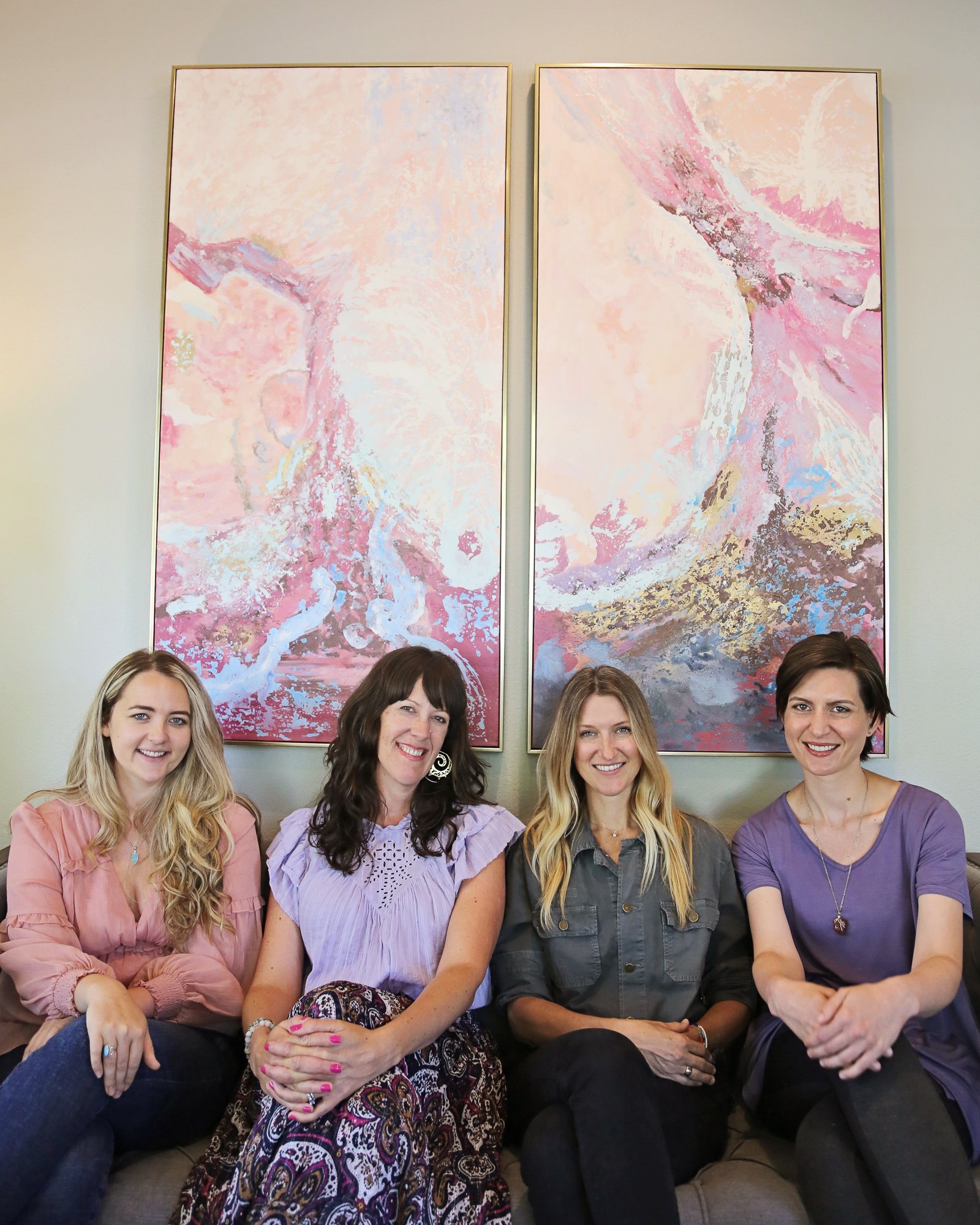
Here at The Holistic Counseling Center, we specialize in integrative psychotherapy that honors the mind-body-spirit connection. We don't just help you set goals—we help you become the person who can achieve them.
We integrate traditional talk therapy with somatic modalities, nervous system regulation tools, and psychospiritual practices, to support deep, lasting transformation. Our therapists bring advanced training in modalities like Internal Family Systems (IFS), CBT, Somatic Experiencing, EMDR, Brainspotting, and mindfulness-based approaches.
We offer holistic therapy services throughout California:
• San Francisco — In-person therapy in downtown SF
•San Anselmo — In-person therapy in Marin county
• El Dorado Hills— In-person therapy in the Sacramento foothills
• Online throughout California — Telehealth therapy from wherever you are
We're currently accepting new clients, with evening and weekend appointments available.
If you're ready to explore how therapy might support your journey, we'd love to connect. Book a free consultation call to learn more about how we can help.
Takeaway
Learning how to achieve your goals isn't really about productivity hacks or finding the right planner. It's about coming into alignment with who you truly are, and who you're becoming.
When you lead with feeling, you're not just setting goals. You're rewiring your brain, healing old wounds, and reclaiming your birthright to create a life that feels as good on the inside as it looks on the outside.
This is the intersection of neuroscience, manifestation and soul work. Of ancient wisdom and modern psychology. Of healing and becoming.
You don't have to do it alone. And you don't have to have it all figured out. You just have to begin.
Start with the feeling. Trust the process. And know that change is always possible.
References
Dispenza, J. (2012). Breaking the Habit of Being Yourself: How to Lose Your Mind and Create a New One. Hay House.
Kyeong, S., et al. (2017)."Effects of gratitude meditation on neural network functional connectivity and brain-heart coupling." Scientific Reports, 7, 5058.
Davidson, R.J., Kabat-Zinn, J., et al. (2003). "Alterations in Brain and Immune Function Produced by Mindfulness Meditation."Psychosomatic Medicine, 65(4), 564-570.
Lipton, B. (2015). The Biology of Belief: Unleashing the Power of Consciousness, Matter & Miracles. Hay House.

About the Author
Kim Burris, LMFT is a licensed holistic psychotherapist, founder of The Holistic Counseling Center, and author of ‘The First 90 Days After Birth.’ Her work has been featured in Vogue, Bustle, and the Daily Om.
Kim honors the mind-body-spirit connection and offers evidence-based psychotherapy with a heart-centered approach that helps people find relief from anxiety and self-sabotage so they can live life with more joy, freedom, and ease.
Kim and her team offer holistic counseling throughout California—in San Francisco, San Anselmo, Berkeley, El Dorado Hills, San Clemente, and online. Book a free consultation call to get started.

Recent Blog Posts:




Anxiety isn't all in your head. A licensed holistic therapist on healing anxiety at the root: your nervous system, what helps, and what therapy can do.