“Can I use AI as my therapist? How can I use AI to help with my mental health? Do I really need to see a therapist if I can use AI?”
These are the questions everyone is asking right now.
As a licensed therapist for 10 years with over 20 years of study in yoga, meditation, and spiritual practice, a university professor teaching graduate students how to become therapists, and a counseling center owner that employs and mentors other therapists I have many thoughts on this subject, so let’s get into it!
I really started to think about these questions after I got a panicked call from a good friend a few months ago.
She'd been using AI to work through some relationship struggles, and the advice it gave her felt... off. Way off. She shared the conversation with me, and I immediately saw the problem.
AI was giving her detailed relationship advice heavily influenced by her fears, her questions, and the leading language she used to describe her situation. Unsurprisingly, it completely missed the complexity of her situation. The nuance. The history. The nervous system dysregulation underneath it all.
That moment really clarified something for me: AI can be a powerful mirror, but it's not a healer.
As a therapist who is also a business owner that uses AI everyday, I've been exploring how to actually use this technology in ways that support healing without replacing the dynamic work of therapy.
I'm sharing my thoughts here as both a therapist and someone who uses AI, please keep in mind that this isn't therapy or medical advice. And to be clear: I do not recommend AI as a replacement for therapy. But I am supportive of the ways it can help people just like you reflect, organize, integrate, and explore, while being honest about its very real limitations. Let’s dive in.
Can AI Help With My Mental Health?
Yes, AI can help with mental health in specific, limited ways, but only when used with proper context and clear boundaries. And no, AI is not and will never be your therapist. But it can be a valuable companion tool on your healing journey.
AI works at the level of the mind. It can offer insight, reflection, and gentle guidance when you give it the right information. Think of it as a tool for organizing your thoughts, not for deep healing work.
How AI Can Support Your Mental Health:
For many people, having access to a tool 24/7 that can offer supportive and affirming reflections is genuinely valuable. AI can support your mental health in these ways:
Immediate Access to Coping Tools: Get grounding techniques, breathing exercises, or coping strategies at 2 AM when you're spiraling or in the middle of a panic attack.
Identifying Cognitive Distortions: Ask AI to help you recognize thought patterns like catastrophizing or black-and-white thinking, and practice reframing them.
Pattern Tracking: Use AI to start tracking what triggers your anxiety or low mood, and what helps you feel more regulated over time.
Psychoeducation: Learn about attachment styles, how trauma affects the nervous system, or explore different therapy modalities before reaching out to a therapist.
Understanding Your Emotions: Get help putting language to what you're feeling and learning about common symptoms of mental health challenges, which can help you recognize when it's time to reach out for professional support.
Bridge to Therapy: If you're not ready for therapy yet, whether because of stigma, cost, access, or vulnerability, AI can be a safe starting point for self-reflection and skill-building.
These tools aren't a replacement for therapy, but they can help you build awareness and coping skills between sessions or as a first step on your healing journey.
If you want to use AI to support your mental health, here's what you need to know: Don't use AI the way you use Google. AI works best when you give it context, not when you ask it one-off questions. Let me show you how to actually use it effectively.
How To Use AI for Personal Growth and Mental Health Support
To use AI effectively for personal growth, you must customize it with specific context about who you are, what you value, and what resonates with you.
AI needs to be customized to respond to you and support you in your unique ways. If I'm asking for parenting support, I tell it what parenting authors and teachers I love so it gives me advice from that corner of the internet. If I want career planning support that actually resonates, I give it my Human Design chart, my age, location, background, and info on previous jobs.
Using AI without guiding it is like driving cross-country without a map. You might eventually get somewhere, but it probably won't be where you wanted to go. Take the time to input details, don't just ask a question like you would with Google.
When used well, AI can be a conversation that might leave you with more questions than answers, but hopefully with some self-reflection that is serving you. Google gives you information. AI can invite a deeper exploration and a path back to yourself.
Think of it as giving AI "bumper lanes", the more context you provide about who you are, what you value, and what resonates with you, the more likely the output will actually be helpful.
Here's where I've seen AI be genuinely supportive:
Mindfulness + Emotional Regulation Tools:
Journaling prompts
Affirmations
Guided breathing exercises and grounding techniques
Pattern tracking
Naming and labeling emotions when overwhelmed
Self-soothing techniques for anxiety symptoms
Inner Work:
Explore your Human Design chart, Gene Keys profile, astrology chart, or Enneagram type for personalized insights into your patterns and purpose
Understand your relational patterns and life purpose through these frameworks
Self-compassion reminders
Gratitude journaling
Psychoeducation:
Learn about attachment styles
Tools for nervous system regulation
Understanding therapeutic concepts like IFS, shadow work . inner child healing or polyvagal theory
Researching different modalities or approaches to healing
Life Organization + Planning:
Time management strategies
Career exploration (with your unique background and preferences)
Goal setting and values alignment
Meal planning and daily routines
Here's what this looks like in practice: If you want AI to give you career planning support but you only ask it a generic question without any context, it's not going to be very helpful. But if you give it your Human Design chart, your age, location, background, some info on previous jobs and what you liked and didn't like about them, suddenly the information becomes way more useful. It invites a deeper exploration and a path back to yourself.
Can I Use AI as My Therapist?
No. AI cannot help you regulate your emotions, heal a frayed nervous system, or learn to identify your unconscious patterns. AI isn't trained to support complex mental health issues. It's prone to bias, can generate false or misleading information, and lacks the capacity for true empathy.
Therapy requires what AI fundamentally cannot provide: nervous system co-regulation, human attunement, and the ability to work with what's unconscious. It requires another living, breathing human being who can feel into what's happening in the room, read your body language, and help you access the parts of yourself you can't see on your own.
AI can offer tools for self-reflection, self-care, and self-discovery work like journaling prompts, visualizations, and affirmations. It can provide general education about therapeutic concepts that might help you deepen into your own healing journey. But it cannot be your therapist.
When Should I See a Licensed Therapist Instead of Using AI?
You should see a licensed psychotherapist instead of using AI when dealing with anxiety, depression, trauma, relationship issues, postpartum challenges, or any situation requiring nervous system co-regulation and deep healing work.If you're struggling with any of these, this is sacred work that deserves to be witnessed by another human.
Signs You Need Therapy, Not AI:
Anxiety, Overwhelm, and Burnout
When anxiety shows up as racing thoughts at 3 AM, a constant knot in your stomach, avoiding situations you used to enjoy, or feeling like you can't turn off the frantic overwhelm, AI can't co-regulate your nervous system or help you metabolize the fear that’s feeding it all.
At The Holistic Counseling Center, we specialize in uncovering the root causes of anxiety with a holistic approach to therapy that honors the mind-body-spirit connection. We don't just teach you coping skills; we help you understand what your anxiety is trying to tell you and address the deeper patterns keeping it alive.
Depression and Existential Dread
If you're feeling numb, unmotivated, disconnected from yourself or others, struggling to get out of bed, or wondering if things will ever feel different, this requires more than reflection. Depression often has roots in unprocessed grief, disconnection from your life purpose, or nervous system dysregulation that needs the presence and attunement of another human to unravel and heal.
Our approach to depression treatment integrates evidence-based modalities like EMDR, Brainspotting, Somatic Therapy and IFS Therapy with spiritual depth, helping you reconnect to your life force energy and find meaning again.
“AI can be a useful tool for self-reflection, but it cannot replace the transformative power of being in relationship with another human being who is trained to hold your complexity, attune to your nervous system, and guide you toward healing.”
Trauma lives in the body. It shows up as hypervigilance, emotional flashbacks, dissociation, relationship struggles, or feeling unsafe in your own skin. AI can give you information about trauma, but it can't really help you reprogram it.
Our therapists are trained in EMDR, Somatic Experiencing, Brainspotting, and other evidence-based modalities that actually help heal trauma at the root. We can help your nervous system learn that the danger has passed and that it's safe to be present in your life again.
Relationship Issues and Attachment Wounds
If you keep repeating the same patterns in relationships, struggle with intimacy or trust, find yourself anxiously attached or withdrawing, or feel like you're constantly misunderstood, this is deep relational work that is best healed with relational therapy.
We heal through our mirror neurons, through eye contact, attunement, safety, rupture, and repair. That can't be replicated with words on a screen. Whether you're navigating partnership struggles, family dynamics, or your own attachment patterns, this work requires real human connection. The therapeutic relationship itself becomes a place to practice healthier relating.
Postpartum and Maternal Mental Health
The transition to motherhood is one of the most vulnerable times in a woman's life. If you're experiencing postpartum anxiety, depression, rage, intrusive thoughts, difficulty bonding with your baby, or feeling like you've lost yourself in motherhood, you need more than information. You need to be emotionally held, witnessed, and supported through the identity shift.
Our postpartum therapists specialize in postpartum anxiety, depression, and the complex experience that is motherhood. We understand the intersection of hormones, attachment, identity, and spirituality during this sacred, amazing and overwhelming time.
If you're noticing patterns you can't quite name, feeling triggered by things you can't explain, or aware that there are aspects of yourself you've rejected or hidden away, this is shadow territory. The shadow holds the parts of ourselves we've deemed unacceptable: our rage, our neediness, our sexuality, our power, our grief.
Shadow work requires someone who can see what you can't see, who can hold space for what you've been afraid to look at. While AI might help you journal about patterns or explore psychological frameworks, it cannot illuminate your blind spots or hold you with compassion as shame surfaces.
This work is about reclaiming the energy you've been using to keep parts of yourself hidden. It's about integrating what's been split off so you can show up more whole and authentic in your life. Shadow work transforms self-judgment into self-acceptance and helps you access the gifts hidden in what you thought were your worst qualities.
Parts Work (Internal Family Systems Therapy)
If you notice that different "parts" of you seem to be in conflict: one part wants to set boundaries while another people-pleases, one part wants intimacy while another pushes people away, one part is ambitious while another sabotages your success, this is the world of parts work.
Internal Family Systems Therapy (IFS) is a specific therapeutic modality that helps you identify and develop a relationship with all the different parts of yourself and your inner world. These parts developed to protect you, often in childhood, and they're still trying to keep you safe even when their strategies no longer serve you.
Our IFS therapists help you meet these parts with curiosity instead of judgment. We help you understand what each part is trying to do for you, how old it is, what it's afraid of, and what it needs in order to relax its role. This helps you reconnect with your Higher Self, creating more ease and peace in your life.
AI cannot do this work because parts often need to be witnessed by another nervous system before they feel safe enough to reveal themselves. The therapeutic relationship provides the safety container for these vulnerable parts to emerge and be healed.
You're Ready for Deep Healing
If you're longing for the kind of healing that changes you at a cellular level, where your nervous system can learn to feel safe, where old patterns can be rewired, where limiting beliefs loose their power, where you can finally come home to yourself, that's the work we do here at The Holistic Counseling Center.
This is integration work. It's the kind of healing that happens when you're held by another human, when you're seen without judgment, when someone can attune to both your suffering and your light.
Ready for in-person or online therapy?
Book a free consultation call to get matched with a holistic therapist.
Risks of Using AI for Therapy
AI has real limitations, and understanding them can help you make informed choices about your healing journey. AI cannot handle the complexity of real human relationships and trauma. It can't hold the both/and of your experience or attune to what's happening in your body as you speak.
You should never use AI for:
Crisis Situations and Safety Concerns
If you're experiencing suicidal thoughts, self-harm urges, or are in a mental health crisis, AI cannot assess your safety or connect you with emergency support. Call 988 (Suicide & Crisis Lifeline) or head to your nearest emergency room.
AI lacks the capacity to recognize danger and respond appropriately. In some tragic cases, AI interactions have actually contributed to harm rather than preventing it.
Complex Mental Health Struggles
AI struggles with nuance. It can't read between the lines, hold paradox, or sense what you're not saying. Skip AI for:
Trauma work
Relationship conflicts
Eating disorders
Active addiction or substance use
Custody battles or high-conflict family dynamics
Any situation where you need someone to diagnose or assess your mental health
These situations need a trained therapist who can attune to your nervous system, see your blind spots, and hold the complexity of your experience.
AI Can Reinforce Negative Patterns Instead of Challenging Them
One of the most important things a therapist does is gently challenge your cognitive distortions, negative thought patterns, and unhelpful ways of seeing yourself or the world. A skilled therapist knows when to push back, when to offer a different perspective, and when to help you see your blind spots.
AI doesn't do this. Instead, it learns from you and adapts to your patterns, which means it may actually reinforce the very thinking that's keeping you stuck. If you're being self-critical, AI might validate that harsh inner voice rather than challenge it. If you're catastrophizing, AI might follow your lead into worst-case thinking.
This is particularly concerning because AI can seem so supportive and validating that you don't realize it's reinforcing patterns that need to be challenged. Over time, relying on AI for emotional support can contribute to social withdrawal, emotional isolation, and a deepening of the very patterns you're trying to heal.
A human therapist brings discernment, they can feel into when validation is needed versus when you need to be lovingly challenged to see things differently. Beyond the clinical limitations, there's something else we need to talk about: your privacy and safety.
Privacy Concerns
AI is not held to the same legal, ethical, or confidentiality standards as a licensed therapist, which means your privacy and safety are not protected in the same way.
Licensed therapists must follow strict professional and ethical guidelines enforced by state licensing boards. These rules exist to protect your safety, privacy, and well-being. Therapists are bound by HIPAA (Health Insurance Portability and Accountability Act), which means your information is legally protected and confidential.
If privacy matters to you (and I hope it does), know that sharing personal information with AI doesn't come with the same protections as therapy.
Will AI Replace Therapy?
No, AI cannot replace therapy because therapy requires working with another human with a nervous system for co-regulation, presence, empathy, and the capacity to work with unconscious material, none of which AI can provide.
Here's the truth: a therapist is a living human being with a nervous system, and the way our brain and body interact and co-regulate in session is a lot of what makes therapy work.
You bring in past pain and have a reparative experience with another human. AI can give you insights for days, but it's not something you can have a relationship with. And relationship is where healing happens.
It's like reading a great self-help book. Yes, it can be life-changing. But you still have to apply those lessons to your life, your self, and your relationships to experience actual change, transformation, and healing.
What Makes Human Therapy Irreplaceable
Nervous System Work
Your nervous system needs another nervous system to feel safe and to heal. This is biological, and it's how we're wired as humans. When you're dysregulated, anxious, or overwhelmed, your therapist's regulated nervous system helps bring yours back into balance. This happens through presence, tone of voice, eye contact, and the simple act of being with another human who can stay grounded when things get intense.
This is called co-regulation, and it's one of the most powerful healing mechanisms in therapy. You literally borrow your therapist's nervous system capacity until your own nervous system learns it can be safe. AI has no nervous system to co-regulate with.
Attunement and Nonverbal Communication
A therapist can read your body language, notice what you're not saying, track the micro-expressions that flash across your face, and feel into the energy of what's happening in the room. They notice when you shift in your seat, when your breathing changes, when your voice gets quiet, or when you suddenly look away.
This attunement allows a therapist to follow the thread of what's most alive in the moment, even when you don't have words for it. They can say "I notice your shoulders just tensed when you mentioned your mother" or "Something shifted when we talked about that, what are you noticing right now?" AI cannot perceive or respond to these nonverbal cues that carry so much of what needs to be healed.
Working With the Unconscious
Real transformation happens when we access what's unconscious: the shadow, the disowned parts, the patterns we can't see ourselves. This requires another human to hold up the mirror and illuminate what you can't see on your own.
A skilled therapist often notices your patterns before you do. They see the ways you avoid certain topics, the defenses that arise when you get close to vulnerability, the beliefs about yourself that are operating beneath your awareness. They can gently point these out and help you work with what's been hidden. AI can only work with what you consciously tell it.
Rupture and Repair
The therapeutic relationship itself becomes a place to practice healthy relating. When there's a misunderstanding, disconnection, or moment of tension between you and your therapist, what we call a rupture, you get to practice repair in real-time with someone who's trained to hold that space.
This is where some of the deepest healing happens, especially if you grew up in relationships where ruptures weren't repaired or where conflict felt dangerous. Learning that you can express hurt, be misunderstood, feel anger, and still be accepted rewires your nervous system and impacts how you show up in all your relationships. AI cannot offer this type of relational healing.
Empathy and Compassion
There's something deeply impactful about being seen and heard by another human being who has no agenda except supporting your healing. A therapist holds space for your full humanity: your pain, your shame, your rage, your grief, your joy, all without trying to fix you or make it better.
This witnessing is medicine. Being truly seen by another human, perhaps for the first time, allows parts of you to come out of hiding. It creates the safety needed for deep healing to occur. AI can reflect your words back to you, but it cannot witness you in this sacred, intimate way.
Clinical Training and Expertise
Therapists spend years in graduate training, supervised clinical hours, continuing education, and personal therapy learning how to hold complex emotional material, navigate ethical dilemmas, recognize mental health conditions, and tailor treatment to each unique person. In California, it takes roughly 6-9 years to become a licensed therapist!
A trained therapist knows when to push and when to back off, when to offer interpretation and when to sit in silence, when to challenge your thinking and when to simply validate your experience. This clinical judgment comes from years of training and cannot be replicated by an algorithm.
What Are the Differences Between AI and Human Therapy?
The main difference is that AI provides information and reflection while human therapy provides co-regulation, attunement, attachment repair, unconscious repatterning, and relational healing.
Understanding these distinctions can help you make informed decisions about when to use AI tools and when you need the full depth of online or in-person therapy.
AI Therapy
Works at the level of the mind
Reflects what you already know
Provides information and prompts
Available 24/7
No relationship or attachment
Can't read body language or energy
Limited to what you consciously tell it
No confidentiality guarantees (most AI platforms)
Low cost or free
Learns and adapts to your patterns (may reinforce them)
No accountability or clinical oversight
Cannot assess safety or severity
Human Therapy
Works with mind, body, spirit, and nervous system
Illuminates what's unconscious
Provides co-regulation and nervous system healing
Scheduled sessions with consistent relational presence
Therapeutic relationship is core to healing
Attuned to nonverbal and somatic cues
Can sense what's not being said
HIPAA-protected and confidential
Significant financial investment
Challenges patterns and offers new perspectives
Licensed, supervised, and ethically bound
Trained to recognize crisis and provide appropriate care
Is AI Therapy Effective?
Research shows mixed results. While some AI chatbots can provide short-term symptom reduction for mild anxiety and depression, studies consistently show that the therapeutic relationship itself is one of the best predictors of successful outcomes (Opland & Torrico, 2024), something AI fundamentally cannot replicate. A 2025 Stanford study found that AI chatbots express stigma and provide inappropriate responses that prevent them from safely replacing mental health providers.
The bottom line? AI is a tool, but deep healing happens 1:1 with another human. If you're ready for support, we're here.
Work With a Holistic Therapist in California
Holistic Therapy In-Person and Online
AI has its place as a tool for reflection and self-exploration. But if you're navigating anxiety, trauma, relationship wounds, or any of the deeper territories of healing, this is sacred work that requires human presence.This is the work that asks you to be witnessed, held, and guided by another human being. It's the work that transforms not just your thoughts, but your body, your relationships, and your sense of self.
This is the work we do at The Holistic Counseling Center.
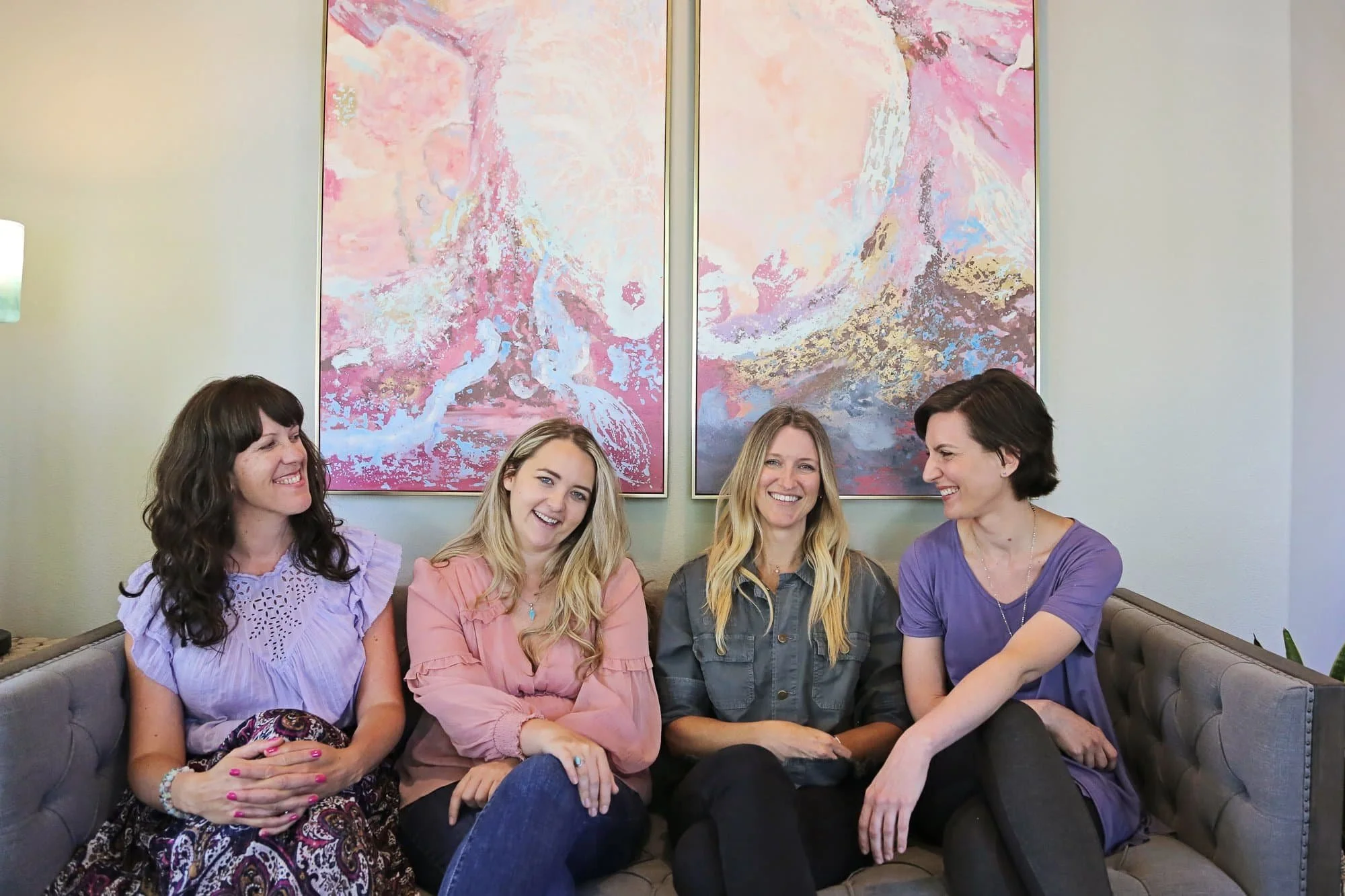
Our therapists integrate evidence-based psychotherapy and counseling with transformative psychospiritual modalities. We're trauma-informed, actively LGBTQIA+ affirming, and deeply committed to equity, accessibility, and liberation for people of all identities and lived experiences.
Our clinicians bring advanced training in modalities including:
We offer therapy in-person in San Francisco, San Anselmo, El Dorado Hills, and online throughout California.
If you're ready for the deeper work, the kind that happens in your body, in relationship, in sacred presence, we're here.
Takeaway
AI can be a valuable companion on your healing journey, but it cannot replace the power of real life therapy. Your nervous system needs another nervous system to co-regulate, to feel safe, to heal. The therapeutic relationship itself, the witnessing, the attunement, the sacred space held between two humans, is one of the most powerful healing tools we have. If you're navigating trauma, crisis, relationship wounds, or any of the deeper territories of healing, this is work that requires human presence. AI can help you organize your thoughts, but only another person can hold your complexity, illuminate what's unconscious, and help you come home to yourself. If you’re looking for support: book a free consultation call to take the next step on your healing journey.
Additional Resources for Your Holistic Healing Journey
Understanding Holistic Therapy
What Is Holistic Counseling? A Guide to Mind-Body-Spirit Healing
Spiritual Therapy + The Benefits of Working with a Spiritual Therapist
How to Find the Right Therapist: A Guide to Beginning Therapy in California
Learn More About Our Therapeutic Approaches
The Spiritual Side of IFS Therapy: Healing With Parts Work and Your Highest Self
The Spiritual Side of Somatic Therapy: Mind-Body-Spirit Healing
Free Resources
Ready for Support?
About the author
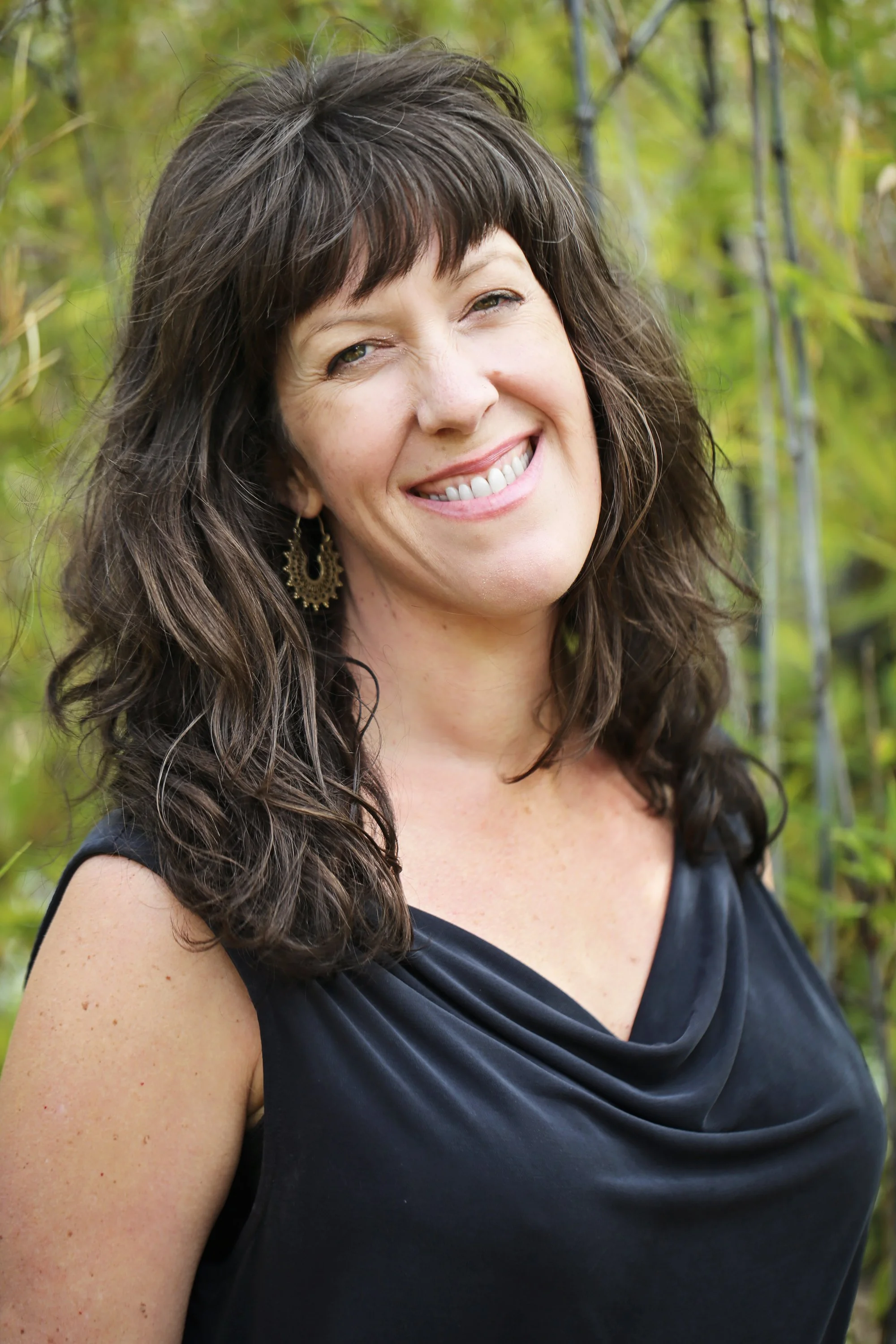
Kim Burris, LMFT, is a licensed marriage and family therapist and founder of The Holistic Counseling Center. With over 10 years of clinical experience and extensive training in spiritual practice, she specializes in bridging evidence-based psychotherapy with psychospiritual wisdom.
Kim is the author of The First 90 Days After Birth: A Self-Care Journal for First-Time Moms and her work has been featured in Vogue, Bustle, and the Daily Om.
References
Moore, J., Grabb, D., Agnew, W., et al. (2025). Expressing stigma and inappropriate responses prevents LLMs from safely replacing mental health providers. Stanford University.https://arxiv.org/pdf/2504.18412
Opland, C., Torrico, T.J. (2024). Psychotherapy and Therapeutic Relationship. In: StatPearls. StatPearls Publishing.https://www.ncbi.nlm.nih.gov/books/NBK608012/
Zhang, Z., Wang, J. (2024). Can AI replace psychotherapists? Exploring the future of mental health care. Frontiers in Psychiatry, 15:1444382.https://pmc.ncbi.nlm.nih.gov/articles/PMC11560757/
Olawade, D.B., Wada, O.Z., Odetayo, A., David-Olawade, A.C., Asaolu, F., Eberhardt, J. (2024). Enhancing mental health with Artificial Intelligence: Current trends and future prospects. Journal of Medicine, Surgery, and Public Health, 3, 100099.https://doi.org/10.1016/j.glmedi.2024.100099
American Psychological Association. (2025). Using generic AI chatbots for mental health support: A dangerous trend.https://www.apaservices.org/practice/business/technology/artificial-intelligence-chatbots-therapists
Frequently Asked Questions
-
No, ChatGPT and other AI chatbots are not substitutes for licensed therapy. While they can offer reflective prompts and general information, they cannot provide the nervous system co-regulation, clinical expertise, or relational healing that therapy offers.
-
Use AI for journaling prompts, psychoeducation, and self-reflection. See a therapist for anxiety, trauma, relationship issues, or any situation requiring deep healing work. We offer in-person therapy across California with offices in El Dorado Hills, Berkeley, San Francisco, San Anselmo and San Clemente. Online therapy is also available. Book a free consultation call to get started.
-
No. Most AI platforms don't offer HIPAA protections. Licensed therapists are bound by strict confidentiality laws that AI chatbots are not. Information shared with AI may be stored, analyzed, or used in ways that are not guaranteed to be private.
-
No. Only licensed mental health professionals have the training and clinical judgment to properly assess and diagnose mental health conditions.
If you are looking for a licensed therapist please schedule a consultation call to learn more about working with one of our therapists.
-
Yes, AI can be a helpful tool for journaling prompts, tracking patterns, or practicing skills between sessions, but it can’t replace therapy with another human.
-
While AI can support self-reflection and personal growth, it’s not a replacement for therapy. Talk with your therapist about which tools might complement your treatment.
-
Start with a free consultation call. At the Holistic Counseling Center, our holistic therapists specialize in anxiety, trauma, shadow work, and transformative healing that goes beyond what AI can offer.
We integrate evidence-based approaches with nervous system healing and spiritual depth.
We offer in-person therapy in San Francisco, Berkeley, San Anselmo, El Dorado Hills, San Clemente, and online in California.